
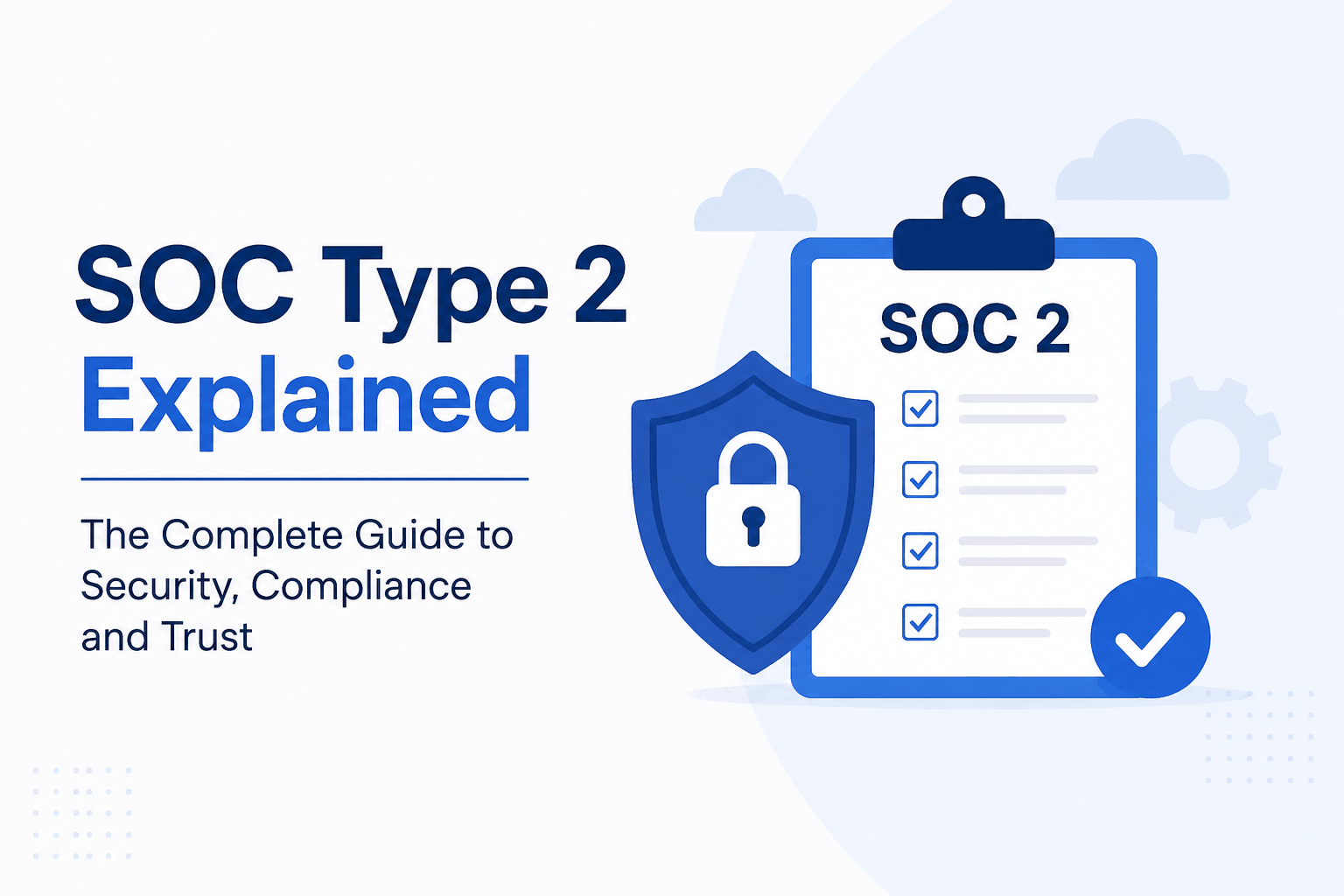
SOC Type 2: What It Is, Why It Matters, and How to Prepare
Businesses today depend heavily on cloud platforms, digital applications, and connected systems to manage their operations. With this growth, protecting sensitive customer information has become a major priority. Customers, partners, and enterprises want confidence that the companies they work with follow strong security practices.
This is where SOC Type 2 plays an important role.
SOC Type 2 is one of the most recognized security compliance standards that helps organizations prove their ability to protect customer data. It evaluates how a company manages security controls, handles risks, and maintains reliable systems over a period of time.
For modern businesses, especially SaaS providers, cloud companies, and technology organizations, SOC Type 2 is no longer only a compliance requirement. It has become a way to demonstrate trust, improve security maturity, and support business growth.
Many organizations start preparing for SOC Type 2 when enterprise customers ask security questions during vendor reviews. However, the strongest approach is to view SOC Type 2 as a continuous security improvement process rather than just an audit project.
What Is SOC Type 2?
SOC Type 2, also known as System and Organization Controls Type 2, is an auditing standard created by the American Institute of Certified Public Accountants (AICPA).
The purpose of SOC Type 2 is to evaluate whether an organization has effective controls in place to protect customer data and maintain secure operations.
Unlike a simple security checklist, SOC Type 2 reviews how security processes are designed and whether they actually work over time.
A SOC Type 2 audit focuses on Trust Services Criteria, which include security, availability, processing integrity, confidentiality, and privacy.
The security criteria are mandatory for every SOC Type 2 audit, while other criteria depend on the organization’s services and customer requirements.
Security focuses on protecting systems from unauthorized access and cyber threats. Availability reviews whether systems remain reliable and accessible when customers need them. Processing integrity checks whether systems process information accurately and as expected. Confidentiality ensures sensitive business information is protected, while privacy focuses on how personal data is collected and managed.
For companies operating in cloud environments, SOC Type 2 provides a structured way to demonstrate that security controls are not only implemented but continuously monitored.
Why Is SOC Type 2 Important?
The importance of SOC Type 2 continues to increase because businesses now rely on third party vendors for critical operations.
A customer does not only evaluate what a company offers. They also evaluate how safely their data will be handled.
SOC Type 2 helps organizations answer important security questions:
- How is customer data protected?
- Who can access sensitive systems?
- How are security incidents handled?
- Are security controls reviewed regularly?
Having a SOC Type 2 report provides evidence that these questions are being addressed through established processes.
Building Customer Trust
Trust is one of the biggest advantages of SOC Type 2 compliance.
When a company completes a SOC Type 2 audit, customers know that an independent auditor has reviewed its security controls.
This becomes especially valuable for businesses selling to enterprise customers. Many organizations require security documentation before signing contracts or approving vendors.
A SOC Type 2 report can reduce security concerns during sales discussions and help companies build stronger relationships with customers.
Supporting Business Growth
Security requirements are becoming a standard part of business decisions.
A company may have an excellent product, but without proper security validation, enterprise customers may hesitate to move forward.
SOC Type 2 helps businesses:
- Strengthen vendor evaluations
- Improve customer confidence
- Support enterprise partnerships
- Demonstrate security maturity
For growing technology companies, compliance can become a competitive advantage.
Ready to assess your SOC Type 2 readiness?
SOC Type 1 vs SOC Type 2
One common question businesses ask is the difference between SOC Type 1 and SOC Type 2.
| Feature | SOC Type 1 | SOC Type 2 |
| Purpose | Reviews whether security controls are designed properly | Reviews whether security controls are designed and operating effectively |
| Evaluation Period | Tested at a specific point in time | Tested over a defined period |
| Focus | Control design | Control design and ongoing performance |
| Customer Assurance | Provides basic security validation | Provides stronger trust and assurance |
| Best For | Companies starting compliance efforts | Companies needing enterprise level security validation |
You can also understand more about different SOC reports through this guide on what a SOC report is and why it matters for modern businesses.
Who Needs SOC Type 2 Compliance?
SOC Type 2 is useful for any organization that stores, processes, or manages customer information.
It is especially important for SaaS companies, cloud service providers, managed service providers, financial technology companies, healthcare technology platforms, and businesses handling confidential customer data.
For SaaS businesses, SOC Type 2 often becomes a customer expectation because their applications directly manage user information.
Cloud providers also benefit because customers want assurance that infrastructure, applications, and data environments are protected properly.
Organizations working with Microsoft cloud environments and enterprise platforms often combine SOC Type 2 preparation with broader security improvements such as cloud security reviews and identity protection practices.
A strong cloud security foundation can support compliance goals, and businesses can strengthen their environment through a proper cloud security assessment.
How to Prepare for a SOC Type 2 Audit
Preparing for SOC Type 2 requires more than creating documents. Organizations need to build repeatable security processes that work in daily operations.
The first step is understanding the current security position.
Many companies begin with a readiness assessment to identify gaps between existing practices and SOC Type 2 expectations. This helps teams understand what needs improvement before the official audit begins.
A readiness review usually looks at areas such as identity management, access controls, data protection, monitoring, incident response, vendor management, and internal processes.
Strengthening Identity and Access Management
Access control is one of the most important parts of SOC Type 2.
Organizations need to ensure that users only have access to the systems and information required for their role.
Strong identity management practices include reviewing permissions regularly, removing unnecessary access, protecting administrator accounts, and implementing stronger authentication methods.
A mature identity security approach helps reduce the risk of unauthorized access and supports compliance requirements.
Companies using Microsoft environments often improve this area through identity security solutions and structured access reviews.
Improving Security Monitoring
SOC Type 2 expects organizations to monitor their systems and respond to security events effectively.
Monitoring helps businesses identify unusual activity, investigate potential threats, and maintain visibility across their environment.
Security teams often use tools such as centralized logging, threat detection platforms, and security monitoring processes to support these requirements.
For organizations managing large cloud environments, solutions such as managed security operations can help maintain continuous monitoring and improve incident response readiness.
Need help preparing for SOC Type 2?
Documenting Security Policies and Processes
Documentation plays an important role in SOC Type 2 preparation.
Many organizations already have security practices in place, but the challenge is proving that these practices are consistently followed.
A SOC Type 2 audit requires evidence that security processes are defined, communicated, and maintained.
Organizations should document important areas such as access management, security responsibilities, incident response procedures, change management, risk handling, and data protection practices.
Clear documentation helps employees understand their responsibilities and gives auditors visibility into how security operations are managed.
Managing Risks and Security Controls
SOC Type 2 is built around understanding and managing risks.
Organizations need to identify potential security threats and ensure appropriate controls are implemented to reduce those risks.
This includes reviewing vulnerabilities, evaluating third party vendors, monitoring system changes, and improving security processes over time.
A strong risk management approach helps companies move from reactive security practices to proactive protection.
Many businesses combine SOC Type 2 preparation with broader cybersecurity programs such as security assessments, compliance reviews, and cloud security improvements.
A structured security assessment and compliance approach helps organizations understand their current security posture and prepare for industry standards.
Common SOC Type 2 Challenges
While SOC Type 2 provides many benefits, organizations often face challenges during preparation.
One common challenge is the lack of consistent security processes.
Some companies may have security tools deployed but do not have proper procedures around monitoring, access reviews, or incident handling.
Another challenge is collecting audit evidence.
During a SOC Type 2 audit, organizations must show proof that controls are working. This can include system logs, access reviews, security reports, training records, and operational documentation.
Companies also face challenges when security responsibilities are unclear.
SOC Type 2 requires coordination between leadership, IT teams, security teams, and employees. Everyone needs to understand their role in maintaining security.
Benefits of SOC Type 2 Compliance
SOC Type 2 provides benefits beyond meeting customer requirements.
The biggest advantage is improved customer confidence. When customers see that security controls have been independently reviewed, they feel more comfortable trusting the organization.
SOC Type 2 also improves internal security maturity.
The preparation process helps companies identify weaknesses, improve workflows, and create better visibility into their technology environment.
For organizations operating in cloud environments, compliance efforts often lead to stronger security practices around data protection, identity management, and monitoring.
How Long Does SOC Type 2 Take?
The timeline for achieving SOC Type 2 depends on the organization’s existing security maturity.
Companies with established security processes may complete preparation faster, while organizations starting from the beginning may need more time.
The process usually includes a readiness assessment, security improvements, policy updates, evidence collection, and the audit period.
A successful SOC Type 2 journey requires planning and continuous improvement.
It is better to prepare carefully instead of rushing through the process, because the goal is not only to achieve compliance but to maintain strong security practices after certification.
SOC Type 2 and Cloud Security
As more organizations move workloads to the cloud, SOC Type 2 has become closely connected with cloud security.
Cloud environments require continuous monitoring, strong access controls, and proper data protection strategies.
A company using cloud platforms must ensure that security controls are applied across applications, infrastructure, identities, and data.
SOC Type 2 helps organizations create a structured approach for managing these areas.
Businesses looking to improve their cloud security posture can explore solutions such as cloud security services to strengthen protection and compliance readiness.
Final Thoughts
SOC Type 2 is more than an audit report. It represents an organization’s commitment to protecting customer information and maintaining reliable security practices.
As cyber threats continue to evolve, businesses need stronger ways to prove that their systems are secure.
SOC Type 2 helps companies build trust, improve operational security, and meet the expectations of modern customers.
Whether you are a growing SaaS company, cloud provider, or enterprise organization, preparing for SOC Type 2 can create long term value by improving security maturity and reducing business risk.
The best approach is to start early, understand your current security gaps, and build a security program that supports both compliance and business growth.
Start your SOC Type 2 journey today.
