
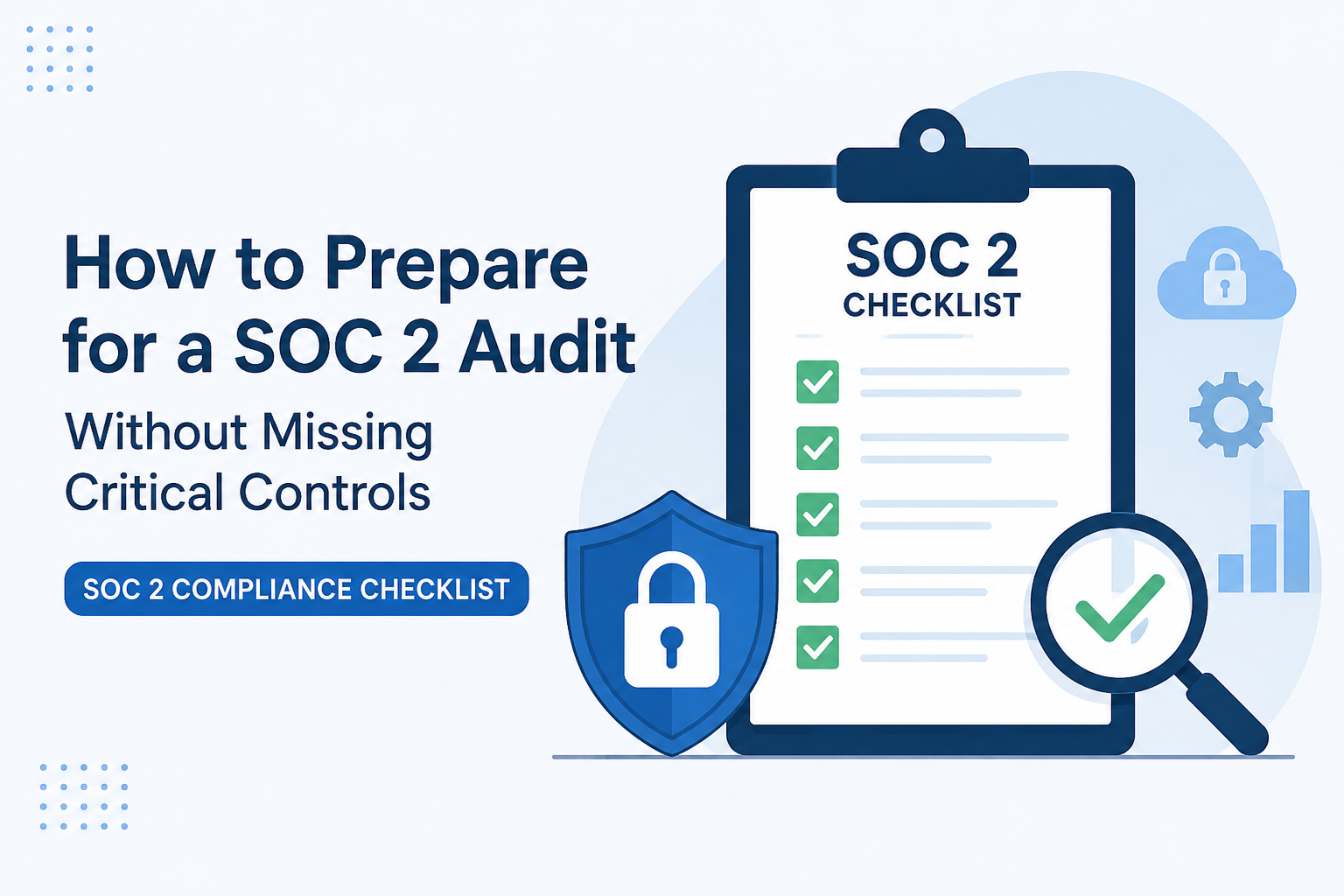
How to Prepare for a SOC 2 Audit Without Missing Critical Controls
Introduction
Preparing for a SOC 2 audit requires more than creating security documents at the last moment. Organizations need a structured approach that connects people, processes, and technology to prove that security controls are properly implemented and consistently maintained.
A well planned SOC 2 compliance checklist helps businesses identify control gaps, organize audit evidence, and prepare teams before the assessment begins.
Many companies struggle during SOC 2 preparation because they focus only on policies and paperwork. In reality, auditors review how security practices work in daily operations, including access management, monitoring, risk handling, vendor security, and incident response.
Based on my experience helping organizations improve cloud security and compliance readiness, successful SOC 2 preparation comes from building repeatable security processes instead of treating compliance as a one time activity.
What Is a SOC 2 Audit?
A SOC 2 audit evaluates how an organization protects customer information based on the Trust Services Criteria. These criteria include security, availability, processing integrity, confidentiality, and privacy.
The goal of SOC 2 compliance is to demonstrate that a company has reliable security practices in place to protect sensitive data and maintain operational trust.
A SOC 2 assessment usually reviews:
- Security policies and procedures
- Identity and access management
- Data protection practices
- Security monitoring
- Risk management processes
- Employee security awareness
- Vendor security controls
- Business continuity planning
Organizations can improve audit readiness by reviewing each control area before the auditor begins testing.
Create a SOC 2 Compliance Checklist Before the Audit
A detailed SOC 2 checklist provides a clear roadmap for preparation. It helps security teams track requirements, assign responsibilities, collect evidence, and identify missing controls.
Your checklist should cover these important areas.
1. Review Security Policies and Documentation
SOC 2 auditors expect organizations to have documented security processes that match their actual operations.
Start by reviewing:
- Information security policies
- Access control policies
- Incident response procedures
- Risk assessment documentation
- Data protection guidelines
- Business continuity plans
Policies should not exist only for compliance purposes. They should reflect how your organization manages security every day.
A strong security framework also supports broader cybersecurity goals. Organizations can improve their overall protection strategy by aligning SOC 2 practices with a structured approach such as cybersecurity best practices.
2. Strengthen Identity and Access Management Controls
Access control is one of the most important areas reviewed during SOC 2 audits. Poorly managed permissions can create unnecessary security risks and compliance issues.
Your preparation should include:
- User access reviews
- Role based access control
- Multi factor authentication
- Privileged account management
- Employee onboarding and removal procedures
Regular access reviews help ensure users only have the permissions required for their responsibilities.
Need help preparing for SOC 2 readiness?
3. Improve Security Monitoring and Logging
SOC 2 compliance requires evidence that organizations monitor their systems and respond to security events effectively.
Security monitoring should include:
- Application activity logs
- Cloud infrastructure monitoring
- Security alerts
- Vulnerability tracking
- Incident detection processes
Collecting logs alone is not enough. Teams need proper procedures to review alerts, investigate suspicious activity, and document responses.
A centralized security monitoring strategy can improve visibility across cloud environments. Solutions such as Microsoft Sentinel services help organizations strengthen security monitoring and threat detection capabilities.
4. Prepare Incident Response and Risk Management Processes
Every organization faces cybersecurity risks, but SOC 2 expects businesses to have a clear process for identifying and handling those risks.
Your incident response preparation should include:
- Defined response procedures
- Assigned security responsibilities
- Regular risk assessments
- Security testing exercises
- Post incident reviews
Testing your incident response plan before an audit helps teams understand their responsibilities and improve response effectiveness.
5. Verify Vendor and Third Party Security
Modern businesses depend on cloud providers, software platforms, and external partners. SOC 2 auditors often evaluate how organizations manage third party security risks.
Review:
- Vendor security assessments
- Third party compliance documents
- Contract security requirements
- Supplier risk management processes
A strong vendor management process shows that security is considered across the entire business ecosystem.
6. Organize Audit Evidence Early
One of the most common SOC 2 preparation mistakes is waiting until the audit starts to collect evidence.
Prepare evidence such as:
- Access review reports
- Security training records
- Monitoring reports
- Policy approvals
- Vulnerability assessments
- Change management records
Keeping evidence organized reduces delays and makes the audit process easier.
Organizations that regularly perform security reviews can identify gaps before they become audit issues. A security assessment approach helps validate whether existing controls are working effectively.
Common SOC 2 Audit Preparation Mistakes
Many organizations face challenges because they treat compliance as documentation work instead of a security improvement process.
Common mistakes include:
- Implementing controls without testing them
- Missing regular permission reviews
- Poor security event tracking
- Ignoring third party risks
- Not maintaining audit evidence
SOC 2 compliance requires continuous improvement. Controls should be reviewed regularly to ensure they remain effective as the business changes.
Final Thoughts
Preparing for a SOC 2 audit becomes easier when organizations follow a structured process and focus on practical security improvements.
A complete SOC 2 compliance checklist helps teams identify missing controls, improve audit readiness, and build stronger security operations.
By focusing on identity management, monitoring, risk management, vendor security, and evidence collection, businesses can approach SOC 2 assessments with greater confidence.
SOC 2 preparation is not only about achieving compliance. It also helps organizations build customer trust, protect sensitive information, and create a stronger foundation for long term security.
Ready to improve your SOC 2 readiness?
