
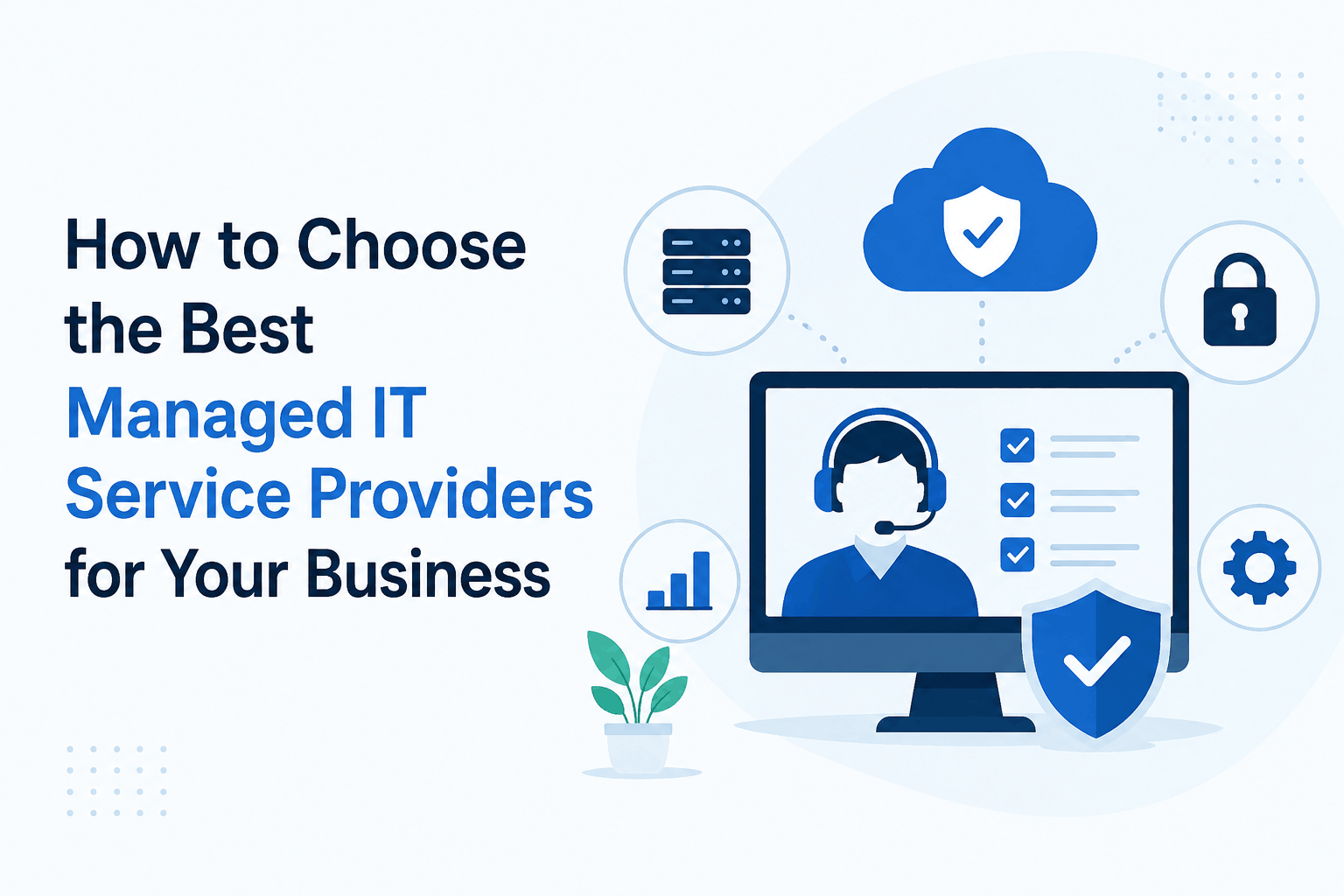
How to Choose the Best Managed IT Service Providers for Your Business
Technology has become the backbone of every modern business. Whether your employees work from the office, remotely, or across multiple locations, your IT infrastructure directly impacts productivity, security, and customer experience. As organizations continue to adopt Microsoft Azure, hybrid work, artificial intelligence, and advanced cybersecurity solutions, managing IT internally has become increasingly complex. This is why many businesses are turning to managed IT service providers to gain expert support while focusing on their core business.
From my experience working with organizations of different sizes, choosing the right managed IT partner is not simply about outsourcing technical support. It is about finding a long term technology partner that understands your business objectives, strengthens your security posture, reduces operational costs, and helps your organization stay competitive.
In this guide, you will learn what managed IT service providers do, why businesses rely on them, and the key factors you should evaluate before making your decision.
What Are Managed IT Service Providers?
Managed IT service providers are companies that proactively manage an organization’s IT environment through an ongoing service agreement. Instead of only fixing problems after they occur, they continuously monitor systems, maintain infrastructure, improve security, and provide strategic technology guidance.
Their services often include cloud management, network administration, cybersecurity, endpoint management, Microsoft 365 administration, backup and disaster recovery, user support, and IT consulting. Many providers also help businesses modernize their infrastructure while ensuring compliance with industry regulations.
As organizations continue their digital transformation journey, managed IT service providers have evolved from traditional support vendors into trusted technology advisors that help businesses make smarter IT investments.
Why More Businesses Are Choosing Managed IT Service Providers
Technology downtime is expensive. Security incidents are becoming more sophisticated, compliance requirements continue to increase, and skilled IT professionals remain difficult to hire and retain. For many organizations, building an internal team with expertise across cloud, networking, cybersecurity, Microsoft technologies, and compliance is simply not practical.
Partnering with experienced managed IT service providers gives businesses immediate access to certified professionals without the cost of expanding their internal workforce. More importantly, businesses benefit from proactive monitoring, predictable monthly costs, faster issue resolution, and access to the latest technologies and security best practices.
Instead of reacting to IT problems, businesses can focus on innovation while their technology environment is continuously monitored and optimized.
Ready to Strengthen Your IT Infrastructure?
Key Factors to Consider When Choosing Managed IT Service Providers
Selecting the right provider requires more than comparing pricing. Every business has unique technology requirements, and your IT partner should understand those needs before recommending solutions.
Look for Industry Experience
A provider with experience in your industry will understand the operational challenges, compliance requirements, and security risks that affect your business. Whether you operate in healthcare, finance, manufacturing, education, or professional services, industry knowledge helps the provider recommend practical solutions instead of generic services.
Experienced providers also understand how technology supports business goals rather than simply maintaining servers and devices.
If your organization is planning cloud adoption or infrastructure modernization, working with experts in Cloud Managed Services can help simplify deployment while reducing operational risk.
Evaluate Their Cybersecurity Capabilities
Cybersecurity should be integrated into every managed service rather than offered as an additional option. Modern businesses face ransomware, phishing attacks, insider threats, identity based attacks, and cloud security risks every day.
A reliable provider should offer security monitoring, endpoint protection, identity management, email security, vulnerability assessments, backup strategies, and incident response planning. These services work together to reduce business risk while improving operational resilience.
If security is one of your priorities, conducting a Microsoft 365 Security Assessment before selecting a managed service strategy can help identify existing vulnerabilities and establish a roadmap for improvement.
Assess Their Cloud Expertise
Cloud technology continues to shape the way businesses operate. Your provider should demonstrate practical experience with Microsoft Azure, Microsoft 365, hybrid cloud environments, and cloud migration strategies.
A knowledgeable cloud partner not only manages infrastructure but also helps optimize performance, improve security, control costs, and support business growth through scalable cloud solutions.
Review Service Level Agreements and Support Availability
One of the biggest differences between average and exceptional managed IT service providers is how they deliver support. Before signing any agreement, review their Service Level Agreement (SLA) carefully. The SLA should clearly explain response times, issue resolution targets, escalation procedures, and support availability.
For example, if your business operates outside standard office hours or serves customers across different time zones, you may require round the clock monitoring and technical support. A provider that only responds during business hours may not be the right fit for your operations.
It is equally important to understand how support requests are handled. Ask whether you will have a dedicated account manager, how incidents are prioritized, and how often you will receive reports on system performance, security, and ongoing improvements.
Ask Questions Before Making Your Decision
Choosing a managed IT partner is a long term investment, so asking the right questions can help you avoid costly mistakes later. Instead of focusing only on pricing, try to understand how the provider approaches technology strategy and customer success.
Consider asking questions such as:
- How do you protect client data against cyber threats?
- What certifications and partnerships does your technical team hold?
- Can you support cloud migration and future business growth?
- How do you handle backup, disaster recovery, and business continuity?
- Will you recommend improvements proactively instead of only fixing issues?
- Can you provide references or case studies from businesses similar to ours?
Their answers will reveal whether they are simply an outsourced support team or a true technology partner invested in your long term success.
Common Mistakes Businesses Make When Choosing Managed IT Service Providers
Many organizations compare providers based only on monthly pricing. While keeping costs under control is important, selecting the cheapest option often leads to limited support, reactive maintenance, and higher expenses in the future.
Another common mistake is overlooking cybersecurity capabilities. Today’s IT environment requires more than basic help desk services. Identity protection, endpoint security, cloud security, compliance, and continuous monitoring should all be part of a modern managed service offering.
Businesses should also avoid providers that cannot demonstrate experience with cloud platforms or provide a clear technology roadmap. Your IT environment will continue to evolve, and your provider should be capable of growing with your business.
Comparison Table: Good vs Best Managed IT Service Providers
| Evaluation Area | Basic Provider | Best Managed IT Service Providers |
| IT Support | Reactive support | Proactive monitoring and optimization |
| Cybersecurity | Basic antivirus | Layered security with continuous monitoring |
| Cloud Services | Limited expertise | Microsoft Azure, Microsoft 365, hybrid cloud expertise |
| Strategic Guidance | Technical support only | Long term IT planning and consulting |
| Reporting | Minimal updates | Regular security and performance reports |
| Scalability | Limited growth support | Easily scales with business expansion |
| Compliance | Basic knowledge | Supports regulatory and security compliance |
This comparison highlights why businesses should evaluate overall value instead of focusing solely on price.
Why the Right Managed IT Partner Creates Long Term Value
The right provider does far more than resolve technical issues. They help improve employee productivity, reduce operational risks, strengthen cybersecurity, and ensure technology investments support business objectives.
As your organization grows, your technology requirements will change. Whether you expand into new locations, migrate additional workloads to the cloud, adopt Artificial Intelligence solutions, or strengthen your cybersecurity posture, your managed IT partner should already have a plan for supporting those changes.
Businesses that treat technology as a strategic investment rather than an operational expense are often better positioned to adapt to changing market conditions and remain competitive.
Final Thoughts
Choosing the right managed service providers is one of the most important technology decisions your business will make. The best provider understands your business goals, recommends practical solutions, proactively manages your environment, and continuously works to improve your IT infrastructure.
Rather than selecting a provider based solely on price, evaluate their industry experience, cybersecurity expertise, cloud capabilities, support model, and commitment to long term success. A trusted managed IT partner becomes an extension of your business, helping you reduce risk, improve efficiency, and confidently embrace digital transformation.
If your organization is evaluating its current IT strategy or planning future technology investments, starting with a professional assessment can help identify gaps, reduce unnecessary costs, and build a roadmap that supports both security and business growth.
Ready to modernize your IT environment?
Frequently Asked Questions
What are managed IT service providers?
Managed IT service providers are companies that remotely manage and support an organization’s IT infrastructure, cybersecurity, cloud services, networks, and end user systems through proactive monitoring and ongoing maintenance.
How do managed IT service providers help businesses?
They reduce downtime, improve cybersecurity, provide access to experienced IT professionals, optimize cloud environments, and allow businesses to focus on growth instead of day to day technology management.
How do I choose the best managed IT service providers?
Look for industry experience, cybersecurity expertise, cloud capabilities, transparent Service Level Agreements, proactive monitoring, customer references, and the ability to support your business as it grows.
Are managed IT services suitable for small businesses?
Yes. Small and medium sized businesses benefit from enterprise level IT expertise without the expense of building a large in house IT department.
What services do managed IT service providers usually offer?
Most providers offer cloud management, Microsoft 365 administration, endpoint management, cybersecurity, backup and disaster recovery, help desk support, network monitoring, compliance assistance, and strategic IT consulting.
