
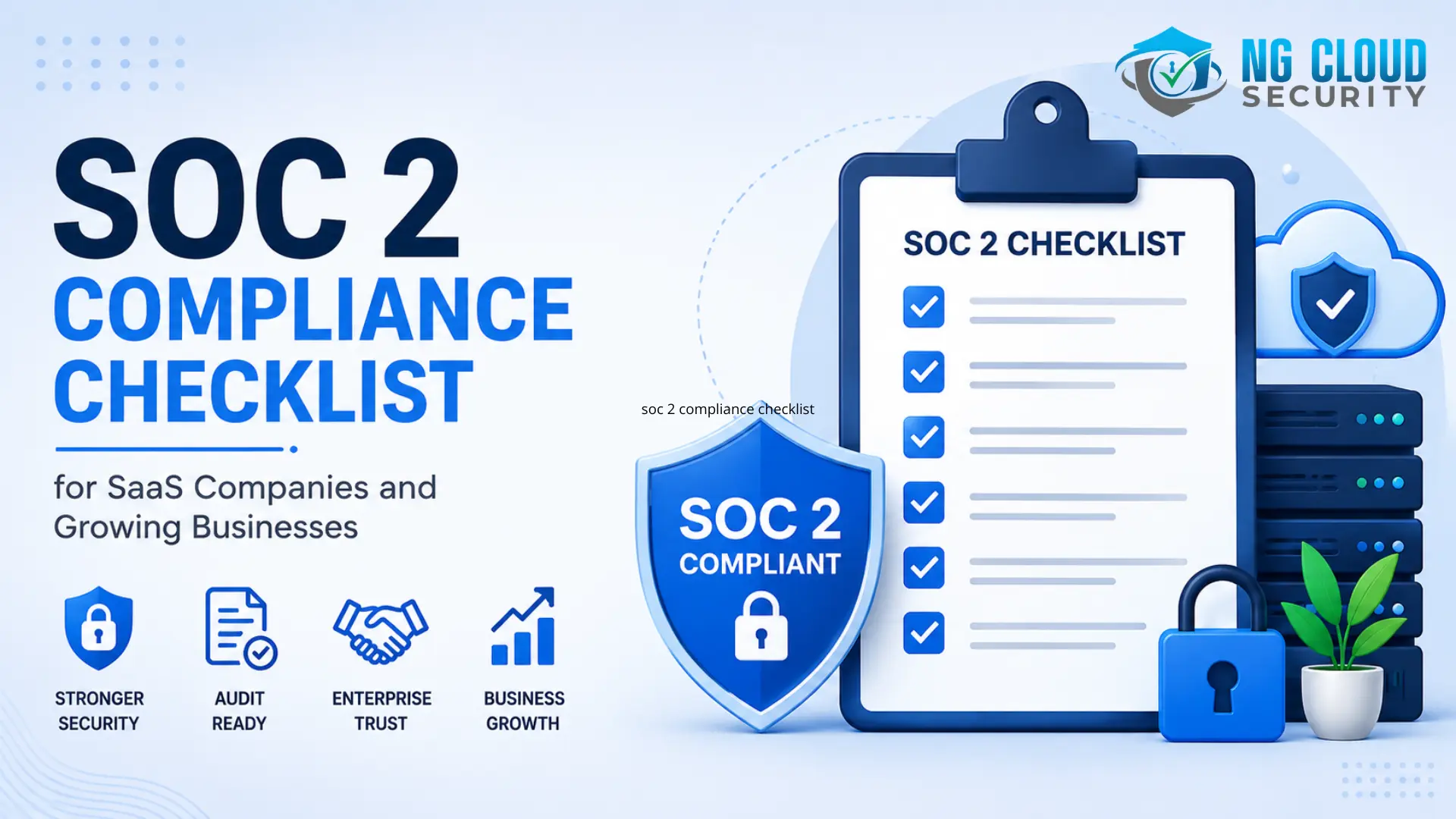
SOC 2 Compliance Checklist for SaaS Companies and Growing Businesses
The SOC 2 compliance checklist your sales team needs exists the moment your first enterprise prospect asks for it — and they always ask before you are ready.
SOC 2 has become the standard security attestation for SaaS companies, cloud platforms, and any growing business that stores, processes, or transmits customer data. A 2024 Vanta survey found that seventy-one percent of organisations require vendors to show a security certification like SOC 2 before signing a contract. Over a third of organisations have lost deals specifically because they could not produce a required security certification. SOC 2 adoption surged forty percent in 2024 as companies rushed to meet enterprise client demands. If you cannot prove your security posture, you are leaving deals on the table — and the gap between where most growing companies start and where a SOC 2 audit requires them to be is exactly what this guide closes.
This SOC 2 compliance checklist is structured for SaaS companies and growing businesses working through their first audit or building the controls needed to sustain continuous compliance. It covers scope definition, Trust Services Criteria selection, the gap assessment process, every control area auditors examine, evidence collection, vendor risk management, and audit readiness — in the sequence that produces results without wasting months on work that does not move the needle.
| No. | Table of Contents |
| 1 | What Is SOC 2 and Why Does It Matter for SaaS Companies? |
| 2 | SOC 2 Type 1 vs Type 2: Which One Do You Need? |
| 3 | The 5 Trust Services Criteria Explained |
| 4 | SOC 2 Compliance Checklist: Before You Start |
| 5 | SOC 2 Compliance Checklist: Scope and System Description |
| 6 | SOC 2 Compliance Checklist: Policies and Documentation |
| 7 | SOC 2 Compliance Checklist: Access Control and Logical Security |
| 8 | SOC 2 Compliance Checklist: Risk Assessment |
| 9 | SOC 2 Compliance Checklist: Change Management |
| 10 | SOC 2 Compliance Checklist: System Monitoring and Incident Response |
| 11 | Vendor and Third-Party Risk Management |
| 12 | Evidence Collection |
| 13 | Audit Readiness |
| 14 | SOC 2 Timeline and Cost: What to Expect in 2026 |
| 15 | The Most Common SOC 2 Mistakes SaaS Companies Make |
| 16 | How NG Cloud Security Helps With SOC 2 Compliance |
| 17 | Frequently Asked Questions |
What Is SOC 2 and Why Does It Matter for SaaS Companies?
SOC 2, which stands for Service Organization Control 2, is an auditing framework developed by the American Institute of CPAs that evaluates how service organizations manage and protect customer data. It is the standard security attestation for SaaS, cloud, and technology companies selling to enterprise buyers.
Unlike compliance frameworks that prescribe specific controls, such as ISO 27001 or PCI DSS, SOC 2 is principles-based. You design your own security controls based on the Trust Services Criteria, and an independent CPA auditor verifies that those controls are designed correctly and operating effectively. This flexibility is both an advantage and a challenge — organizations have latitude in how they meet each criterion, but there is no prescribed control list to work from.
For SaaS companies, following a SOC 2 compliance checklist has moved from a differentiator to a prerequisite. Enterprise procurement teams use SOC 2 reports as a standard part of vendor due diligence. Seventy percent of venture capital firms prefer investing in SOC 2-compliant startups. Over sixty percent of businesses say they are more likely to partner with a startup that has SOC 2. The competitive reality in 2026 is that the absence of SOC 2 costs deals — often silently, in the early stages of enterprise sales cycles, before you ever have a chance to address the gap.
Beyond the commercial case, SOC 2 builds the security and operational discipline that growing businesses need anyway. The controls that satisfy a SOC 2 auditor — access management, incident response, change management, vendor risk, monitoring — are the same controls that reduce breach risk, support cyber insurance applications, and demonstrate governance maturity to boards, investors, and regulators.
SOC 2 Type 1 vs Type 2: Which One Do You Need?
Understanding the difference between Type 1 and Type 2 is the first decision point in any SOC 2 compliance checklist, and the answer determines your timeline, your audit budget, and how useful your report will be to enterprise buyers.
- SOC 2 Type 1 evaluates whether your security controls are designed correctly at a single point in time. It answers the question: does your organization have controls in place that, if they work as described, would meet the Trust Services Criteria? Type 1 can be completed in one to three months and is suited for startups with a hard deadline, organizations early in their compliance journey, or situations where a deal requires a certification on a short timeline.
- SOC 2 Type 2 evaluates whether your controls are both designed correctly and operating effectively over an observation period of three to twelve months. It answers the question: did your organization’s controls actually work consistently during the audit period? Enterprise procurement and risk teams use SOC 2 Type 2 as the standard. Type 1 gets you in the door; Type 2 closes larger deals.
The recommendation for eighty percent of B2B SaaS companies, based on analysis of more than five hundred SOC 2 audits, is to go straight to Type 2 with a six-month observation period. Type 1 is faster, but it requires a follow-up Type 2 to satisfy enterprise buyers, which means paying for two audits rather than one. If you have a nine to twelve month runway and are targeting enterprise customers, go directly to Type 2.
No platform or additional budget can eliminate the Type 2 observation period. What you can compress is the readiness phase. Teams with mature policies, documented access reviews, change management processes, incident response procedures, and vendor risk programs move through readiness in weeks. Teams starting from scratch need three to four months of structured preparation before the observation period begins.
The 5 Trust Services Criteria Explained
The SOC 2 compliance checklist is organized around the Trust Services Criteria published by the AICPA. These are the five categories an auditor measures your controls against. Understanding them before scoping your audit prevents over-commitment to criteria that add audit effort without adding meaningful value for your customers.
- Security (Common Criteria, CC1 through CC9): Required in every SOC 2 audit without exception. Covers control environment, communication and information, risk assessment, monitoring, control activities, logical and physical access, system operations, change management, and risk mitigation. The Security criterion protects systems and data from unauthorized access and is the foundation on which all other criteria rest. If you are preparing a SOC 2 compliance checklist for the first time, every item on it starts here.
- Availability (A1 series): Evaluates whether systems are operational and accessible as committed to users. Covers disaster recovery, business continuity planning, performance monitoring, and incident response for availability events. Include Availability if your customers rely on your platform uptime and you have made explicit SLA commitments.
- Processing Integrity (PI1 series): Evaluates whether system processing is complete, valid, accurate, timely, and authorized. Most relevant to companies processing financial transactions, data transformations, or any workflow where the accuracy of output is a core customer commitment. Most SaaS companies do not need this criterion unless customers specifically ask for it.
- Confidentiality (C1 series): Evaluates whether information designated as confidential is protected as committed. Relevant to companies that store or process sensitive customer data — contracts, business plans, financial records, intellectual property — and have made explicit confidentiality commitments to customers.
- Privacy (P1 through P8 series): Evaluates the collection, use, retention, disclosure, and disposal of personal information in accordance with privacy commitments and the AICPA’s generally accepted privacy principles. Relevant to companies handling significant volumes of personal data, particularly where GDPR, CCPA, or other privacy regulations apply.
The practical starting point for most SaaS companies: Security is mandatory, add Availability if you have uptime commitments, add Confidentiality if customers share sensitive business information with your platform. Leave Processing Integrity and Privacy out of scope unless customers specifically require them or your business model makes them genuinely applicable. Choosing too many Trust Services Criteria in a first audit adds meaningful effort and cost without proportional commercial value.
SOC 2 Compliance Checklist: Before You Start
The preparation steps before any technical controls are implemented determine whether your SOC 2 program runs smoothly or generates months of rework. Use this section of the SOC 2 compliance checklist to establish the governance foundation.
- Define your business objective for SOC 2. Are you pursuing SOC 2 to close a specific enterprise deal, to satisfy a vendor assessment requirement, to support a fundraising process, or to build a long-term compliance program? The answer shapes every subsequent decision including report type, scope, timeline, and investment level.
- Secure executive commitment and assign a project owner. PwC’s Global Compliance Survey 2025 found that strong executive support is the most important factor in successful compliance programs. Assign a named owner with authority to make decisions, allocate budget, and escalate blockers. Without executive sponsorship, SOC 2 programs stall at the first resource conflict.
- Identify the cross-functional team. SOC 2 touches engineering, security, IT, HR, legal, and operations. Identify the representatives from each function who will own specific control areas. Document their roles and availability before the audit begins.
- Choose your audit firm before finalizing scope. SOC 2 audits must be conducted by a licensed CPA firm. The firm you choose influences your timeline, your audit experience, and how your report is perceived by enterprise buyers. Interview at least two firms before committing. Ask specifically about their experience with SaaS companies at your stage and their approach to supporting first-time auditees.
- Decide whether to use a compliance automation platform. Platforms such as Vanta, Drata, Secure frame, and Tugboat Logic automate evidence collection, monitor controls continuously, and provide pre-built policy templates. They reduce manual effort significantly, particularly during the observation period where evidence must be collected consistently over months. Evaluate the cost against the time savings for your team size and audit timeline.
- Conduct a readiness assessment before fieldwork begins. A readiness assessment, sometimes called a gap assessment, evaluates your current security posture against SOC 2 requirements and identifies which controls are in place, which need improvement, and which do not exist yet. Starting the observation period before completing a readiness assessment means spending observation time building controls instead of operating them — which does not satisfy the auditor.
SOC 2 Compliance Checklist: Scope and System Description
Scope definition is the most consequential step in your SOC 2 compliance checklist. Scope that is too narrow misses systems that auditors expect to see. Scope that is too broad adds unnecessary controls, evidence, and cost. Getting scope right at the start saves weeks of rework during fieldwork.
- Define your system boundary. The system description in your SOC 2 report defines the boundary of everything in scope — production environment, infrastructure, supporting services, and operational processes. Be specific about what is included and what is explicitly excluded. Vague boundaries lead to disagreements mid-audit and expanded timelines.
- Inventory your production infrastructure. List every cloud service, database, application component, API, and data store that is part of your in-scope system. For SaaS companies on AWS, Azure, or GCP, this means identifying which services touch customer data and which are purely internal.
- Map your subservice organizations. Subservice organizations are the vendors and cloud providers your in-scope system depends on — your cloud hosting provider, your CDN, your monitoring service, your payment processor. SOC 2 auditors assess how you rely on these organizations and what their security controls cover. Cloud providers like AWS, Azure, and GCP each have their own SOC 2 reports that carve out the controls they manage so your report can focus on the controls you manage above that layer.
- Define the Trust Services Criteria in scope. Based on the criteria selection guidance above, document which criteria are in scope and provide a brief justification for each. Share this with your auditor for alignment before any fieldwork begins.
- Write a draft system description. The system description is a narrative included in your SOC 2 report that explains what your system does, who uses it, what infrastructure it runs on, and what controls you have in place. Auditors review this document carefully. Writing a draft early in the process forces clarity on scope and surfaces gaps in your understanding of your own system.
SOC 2 Compliance Checklist: Policies and Documentation
Policies are the documented evidence that your organization has made deliberate decisions about how to manage security. Without them, auditors cannot assess whether controls are operating as intended because there is no stated intention to compare against. Policies that exist but are not followed are as problematic as no policies at all.
- Information Security Policy: The master security policy that establishes your organization’s commitment to security, assigns responsibility, and sets the framework for all subsidiary security policies. This is the document auditors ask for first.
- Access Control Policy: Documents how access to systems and data is granted, reviewed, and revoked. Covers role-based access control, least privilege principles, access request and approval processes, and periodic access review requirements.
- Acceptable Use Policy: Defines how employees may use company systems, data, and devices. Covers personal use of company equipment, data handling requirements, and consequences for policy violations.
- Incident Response Plan: Documents how your organization detects, responds to, and recovers from security incidents. Must include roles and responsibilities, escalation paths, communication templates, and post-incident review requirements. Auditors test this against actual incidents during the observation period.
- Change Management Policy: Documents how changes to production systems, infrastructure, and code are approved, tested, and deployed. Covers the approval workflow, testing requirements, rollback procedures, and emergency change processes.
- Vendor Risk Management Policy: Documents how your organization evaluates, onboarding, monitors, and offboards third-party vendors that have access to your systems or customer data.
- Business Continuity and Disaster Recovery Plan: Documents how your organization maintains operations and recovers systems following a significant disruption. Includes recovery time objectives and recovery point objectives for in-scope systems.
- Data Classification and Handling Policy: Documents how your organization classifies data by sensitivity and what handling requirements apply to each classification level.
Every policy must be version-controlled, approved by an appropriate authority, reviewed at least annually, and acknowledged by the employees it applies to. Auditors look for evidence of all four — the policy document alone is not sufficient.
SOC 2 Compliance Checklist: Access Control and Logical Security
Access control is the most heavily tested area in every SOC 2 audit. CC6 — Logical and Physical Access Controls — generates more findings than any other Common Criterion. The SOC 2 compliance checklist items in this section address the controls auditors examine and the evidence they sample.
- Multi-factor authentication: MFA must be enforced for all users accessing in-scope systems, admin consoles, cloud infrastructure, and production environments. This is non-negotiable for every SOC 2 audit. Auditors will sample user accounts to verify MFA enrollment and will flag any production system accessible with a password alone.
- Role-based access control: Every user’s access to in-scope systems must be scoped to the minimum required for their role. Auditors compare user access lists against job function. Users with broader access than their role requires is a consistent finding. Define roles clearly, assign permissions to roles rather than individuals, and review for role creep regularly.
- Access provisioning and deprovisioning process: Document and operate a formal process for granting new access, modifying existing access, and revoking access when an employee changes roles or leaves the organization. Auditors test this against a sample of user joiners, movers, and leavers during the observation period. A new hire who retained previous-role access or a terminated employee whose account was not disabled within a defined window are both audit findings.
- Privileged access management: Production systems, cloud infrastructure consoles, and database admin access must be restricted to a minimum set of named individuals with documented business justification. Privileged access should be reviewed on a defined schedule — quarterly at minimum. Just-in-time access for privileged operations reduces standing access that increases the blast radius of a compromise.
- Periodic access reviews: Conduct formal access reviews on a defined schedule — quarterly for privileged access, semi-annually for standard access — and retain evidence of each review including who reviewed, what was reviewed, what was approved, and what was revoked. Access reviews without documented evidence satisfy neither your controls nor your auditor.
- Physical security: For organizations with on-premises infrastructure or offices where servers are housed, document physical access controls including key card or badge access, visitor logs, and equipment inventory. SaaS companies on public cloud platforms typically rely on their cloud provider’s physical security controls, which are documented in the provider’s own SOC 2 report.
- Encryption: Customer data must be encrypted in transit and at rest. Document your encryption standards, the key management approach, and the specific implementation for each data store in scope. TLS 1.2 or higher for data in transit and AES-256 for data at rest are the minimum standards auditors expect in 2026.
Not Sure If Your Controls Are Ready for a SOC 2 Audit?
NG Cloud Security helps SaaS companies and growing businesses prepare for SOC 2 compliance with gap assessments, control implementation, evidence collection support, and ongoing managed compliance oversight.
SOC 2 Compliance Checklist: Risk Assessment
CC3 — Risk Assessment — requires your organization to identify, analyze, and respond to risks that could prevent you from achieving your security commitments. A risk assessment that exists only on paper fails the operating effectiveness test. Auditors look for evidence that your risk assessment process is active and that identified risks are actually being managed.
- Document a formal risk assessment methodology. Define how your organization identifies risks, assesses their likelihood and impact, and determines appropriate responses. The methodology should be documented before the observation period begins.
- Conduct a formal risk assessment at least annually. The risk assessment must identify risks to all in-scope systems, data types, and operational processes. It must be reviewed and approved by an appropriate owner. Auditors will ask for the most recent risk assessment and will compare identified risks against your control environment to verify that high-risk areas are addressed.
- Maintain a risk register. Document identified risks, their likelihood and impact ratings, assigned owners, and current mitigation status. The risk register should be updated when new risks are identified, when the environment changes significantly, or at least annually during the formal review.
- Document risk responses for each identified risk. Accepted, mitigated, transferred, and avoided are the standard response types. For accepted risks, document the business justification and the residual risk level. Auditors look for deliberate decision-making, not just a list of risks.
- Review the risk assessment after significant changes. A new product feature, a new cloud service, a new data type, or a security incident are all triggers for an interim risk assessment update. Waiting for the annual review after a significant change creates a gap that auditors will identify.
SOC 2 Compliance Checklist: Change Management
CC8 — Change Management — evaluates whether changes to your production systems, infrastructure, and application code are authorized, tested, and deployed in a controlled manner. Uncontrolled changes are a leading cause of security incidents and availability failures, and auditors test this area thoroughly during observation.
- Establish a formal change management process before the observation period begins. Every change to in-scope systems must go through the defined process. Changes that bypass the process are findings, even if the change itself was benign.
- Require peer review for all production code changes. Pull requests reviewed and approved by at least one other developer before merging to production is the baseline expectation. Direct commits to production by developers without review is a consistent finding in SaaS company audits.
- Separate production access from development access. Developers should not have direct write access to production environments. Changes should be deployed through automated pipelines that enforce the change management process, not through manual production access.
- Test changes before deploying to production. Maintain separate development, staging, and production environments. Document your testing requirements and collect evidence of testing for a sample of production changes during the observation period.
- Maintain a change log. Keep a record of production changes including what changed, who approved it, when it was deployed, and how it was tested. Your source control system, CI/CD platform, and change tracking tool together provide the audit trail auditors sample.
- Define and test an emergency change process. Some changes cannot wait for the standard approval workflow. Define a documented emergency change process with appropriate authorization requirements and a post-deployment review step. Auditors will test whether emergency changes followed the emergency process and whether they were reviewed after the fact.
SOC 2 Compliance Checklist: System Monitoring and Incident Response
CC7 — System Operations — and the monitoring requirements that run through CC4 — Monitoring of Controls — together require that your organization is continuously watching for security events and responding to them appropriately. Monitoring that is not tuned and incident response that is not tested produce paper compliance without operational effectiveness.
- Implement centralized logging. All in-scope systems should send logs to a centralized logging platform. Logs must cover authentication events, administrative actions, access to sensitive data, system errors, and configuration changes. Log retention must meet your documented policy requirements and the expectations of your Trust Services Criteria.
- Configure security alerting. Define the events that should trigger alerts and configure your monitoring platform to detect and notify on them. Common required alerts include failed authentication attempts above threshold, administrative access outside business hours, changes to security group or firewall rules, and access to sensitive data stores by unexpected accounts.
- Conduct quarterly vulnerability scanning. Maintain a vulnerability management program that scans in-scope systems on a defined schedule, tracks identified vulnerabilities, and remediates critical and high findings within documented SLAs. Auditors will ask for evidence of scanning results and remediation tracking across the observation period.
- Conduct at least annual penetration testing. Penetration testing by a qualified third party provides evidence that your security controls are effective against realistic attack scenarios. Most auditors expect annual penetration testing on in-scope systems. Document the scope, results, and remediation actions from each test.
- Document and operate an incident response process. When a security incident occurs during the observation period, auditors will test whether it was detected, logged, assessed, and responded to according to your documented incident response plan. Incidents that occurred and were not handled according to the plan are findings. Incidents that occurred and were handled correctly are evidence of effective operating controls.
- Conduct tabletop exercises. At least annually, run a simulated incident response exercise with your cross-functional team. Document the scenario, the participants, and the outcomes. Tabletop exercise documentation demonstrates that your team has practiced the incident response process rather than only having it documented.
SOC 2 Compliance Checklist: Vendor and Third-Party Risk Management
CC9 — Risk Mitigation — includes specific requirements for managing risks from third-party vendors. Verizon’s 2025 Data Breach Investigations Report found that thirty percent of breaches involved a vendor or third party. Auditors examine your vendor risk management program in detail, particularly for vendors with access to customer data or production systems.
- Maintain a vendor inventory. Document every third-party vendor that has access to your in-scope systems or customer data. Include the services they provide, the data they can access, their geographic location, their compliance certifications, and their contract renewal dates.
- Conduct vendor risk assessments before onboarding. Before granting a new vendor access to customer data or production systems, assess their security posture. For vendors with their own SOC 2 or ISO 27001 reports, review those reports. For vendors without certifications, use a security questionnaire to evaluate their controls.
- Review vendor SOC 2 reports annually. For every vendor whose SOC 2 report is relied upon as part of your control environment, review the report annually. Document the review, including any exceptions or findings in the vendor’s report that affect your system and how you have addressed them.
- Include security requirements in vendor contracts. Every vendor contract covering access to customer data should include data protection requirements, breach notification obligations, audit rights, and termination rights for security failures. Document that these clauses exist in your key vendor contracts.
- Monitor high-risk vendors continuously. Vendors with access to sensitive customer data or production systems require more than an annual review. Establish continuous monitoring for these vendors including automated alerts from security rating services and periodic security questionnaire updates.
- Manage vendor offboarding. When a vendor relationship ends, revoke all access to your systems and data, retrieve or certify destruction of any data provided to the vendor, and document the offboarding in your vendor inventory. A terminated vendor whose API credentials remain active is a finding.
SOC 2 Compliance Checklist: Evidence Collection
A SOC 2 Type 2 audit is fundamentally an evidence-based process. Your controls must not only exist and operate — they must be documented in a way that allows an auditor to verify that they operated consistently throughout the observation period. Evidence collection is where most first-time SOC 2 auditees underestimate the effort involved.
- Understand what auditors sample. For each control, auditors select a sample of instances from the observation period and request evidence of those specific instances. For access reviews, they might request evidence of a specific quarterly review. For change management, they might request pull request records for a specific deployment. For incident response, they might request documentation of a specific incident. Your evidence must be retrievable on a specific basis, not just aggregated.
- Export and retain audit trails systematically. Do not rely on being able to generate evidence on request at audit time. Systems that retain logs only for ninety days when your observation period is six months leave gaps. Configure log retention before the observation period begins and verify that evidence will be available at the end.
- Document control owner actions in the moment. Access reviews, risk assessments, policy reviews, and tabletop exercises must be documented when they happen. Documentation created after the fact — even if the control was executed correctly — lacks the contemporaneous evidence that auditors expect.
- Maintain an evidence library organized by control. Build a systematic evidence folder structure organized by Trust Services Criterion and control. This makes evidence request responses faster and reduces the time your team spends during fieldwork searching for specific artifacts.
- Track evidence freshness for recurring controls. Access reviews, vulnerability scans, penetration tests, and vendor assessments must recur at the frequency your policy requires throughout the observation period. A single access review at the start of a twelve-month observation period does not satisfy a quarterly access review requirement.
- •Use compliance automation platforms to collect evidence continuously. Platforms like Vanta and Drita integrate with AWS, GitHub, Google Workspace, Okta, and other systems to pull evidence automatically. This reduces the manual evidence collection burden significantly, particularly for controls that require continuous or recurring evidence across a long observation period.
SOC 2 Compliance Checklist: Audit Readiness
The final section of the SOC 2 compliance checklist covers the steps in the last thirty to sixty days before your audit kickoff. Getting these right determines whether your audit runs smoothly or extends over missed evidence and unexpected findings.
- Complete a pre-audit walkthrough with your auditor. Before fieldwork begins, walk through your system description, control environment, and evidence structure with your audit firm. Surface any scope disagreements or documentation gaps before the formal audit clock starts running.
- Prepare your team for auditor requests. Auditors submit evidence request lists during fieldwork. Assign named owners to each control area who can respond to requests within your agreed service level. Slow evidence responses extend audit timelines and create pressure that leads to mistakes.
- Resolve outstanding issues from your readiness assessment. Any control gaps identified in your readiness assessment should be remediated before the observation period ends. Going into a Type 2 audit with known open findings is avoidable if remediations are tracked and completed.
- Conduct a final policy review. Verify that all policies are current, approved, and acknowledged by employees. Policies that have lapsed their annual review date are a finding. Employees who have not acknowledged the policy are a finding.
- Prepare a point-of-contact document for your auditor. Provide your audit firm with a clear contact list showing who owns each control area, their availability, and how to reach them during fieldwork. This reduces the time spent on coordination logistics during the audit itself.
- Communicate internally about the audit process. Employees who are contacted by auditors without context tend to give inconsistent answers. Brief relevant team members on the audit process, what questions they might be asked, and how to respond accurately and professionally.
SOC 2 Timeline and Cost: What to Expect in 2026
The SOC 2 compliance timeline and cost vary based on your starting point, audit type, scope, and whether you use a compliance automation platform. Understanding what drives these variables prevents budget and timeline surprises that disrupt audits.
- Type 1 timeline: Readiness assessment and gap remediation take one to three months for organizations with some existing security controls. Fieldwork and report issuance take four to six weeks. Total Type 1 timeline is typically two to four months from start to report.
- Type 2 timeline: Readiness phase takes one to three months. The observation period is a minimum of three months and typically six months for a first audit. Fieldwork and report issuance take four to six weeks after the observation period ends. Total Type 2 timeline is typically six to twelve months from start to report.
- Audit cost range: SOC 2 audits conducted by CPA firms range from fifteen thousand dollars to one hundred thousand dollars depending on scope, organization size, number of Trust Services Criteria, auditor reputation, and geographic market. Small SaaS companies with Security-only scope and a compliance platform typically pay fifteen thousand to thirty thousand dollars. Mid-market companies with multiple criteria pay thirty thousand to sixty thousand dollars or more.
- Compliance platform cost: Vanta, Drita, Secure frame, and similar platforms cost approximately ten thousand to thirty thousand dollars per year. For organizations that would otherwise spend significant internal engineering and operational time on manual evidence collection, the ROI is typically positive within the first audit cycle.
- Observation period is fixed: No investment in tools or consulting compresses the observation period itself. A six-month observation period requires six months of operating controls and collecting evidence. What you can accelerate is the readiness phase before the observation period begins.
The Most Common SOC 2 Mistakes SaaS Companies Make
These mistakes appear consistently across first-time SOC 2 audits. Most are avoidable with the SOC 2 compliance checklist in this guide.
- Starting the observation period before controls are in place. Observation time with incomplete controls produces findings. Complete your readiness assessment and remediate gaps before the observation clock starts.
- Choosing too many Trust Services Criteria. Adding Availability, Confidentiality, Processing Integrity, or Privacy before you need them increases audit scope, cost, and effort without proportional commercial value. Start with Security and add criteria only when customers specifically require them.
- Treating SOC 2 as a one-off project rather than an ongoing program. SOC 2 Type 2 audits renew annually. Controls must operate continuously, evidence must be collected throughout the year, and policies must be reviewed on schedule. Organizations that treat SOC 2 as a project struggle at renewal because the evidence collection habits never became routine.
- Not defining system boundaries clearly before fieldwork. Unclear scope leads to disagreements mid-audit, expanded timelines, and additional cost. Agree on scope with your auditor in writing before fieldwork begins.
- Underestimating recurring evidence requirements. Access reviews, vulnerability scans, vendor assessments, and policy reviews must occur at the documented frequency throughout the entire observation period. A single instance of each does not satisfy a quarterly or annual requirement.
- Not testing incident response before an incident occurs. Auditors test whether actual incidents during the observation period were handled correctly. A team that has never run a tabletop exercise handles real incidents inconsistently, creating findings from legitimate security events that were managed poorly.
- Failing to manage vendor risk as a documented program. Vendor risk management that consists of accepting vendors’ assurances without documentation is a consistent finding. Every significant vendor requires a review on record.
- Building controls without policy backing. A control that operates correctly but is not documented in an approved policy gives the auditor no basis to verify that the control is intentional. Policy and control must exist together.
How NG Cloud Security Helps With SOC 2 Compliance
SOC 2 compliance is a multi-month program that touches every function in a SaaS company or growing business. Most organizations have the technical capability to implement the required controls. What they consistently lack is the compliance expertise to scope the program correctly, the project management discipline to drive cross-functional work to completion on a fixed timeline, and the ongoing operational capacity to collect evidence continuously throughout the observation period.
NG Cloud Security provides SOC 2 compliance services designed specifically for SaaS companies and growing businesses working through their first audit or maintaining continuous compliance after achieving certification.
Our SOC 2 services include:
- A SOC 2 readiness assessment that evaluates your current security posture against the Trust Services Criteria, identifies control gaps, and produces a prioritized remediation roadmap with timeline estimates
- Scope definition and system description drafting aligned with your audit firm’s requirements and your business model
- Policy and documentation development covering all eight core policies auditors require, written for your specific environment rather than templated generics
- Control design and implementation across access management, change management, risk assessment, monitoring, and vendor risk management
- Evidence collection program design including tool configuration, evidence folder structure, and recurring control schedules that ensure evidence is available when auditors request it
- Compliance automation platform selection and implementation if you are evaluating Vanta, Drita, or Secure frame as part of your program
- Vendor risk management program design including vendor inventory, risk assessment process, questionnaire templates, and ongoing monitoring approach
- Audit preparation support including pre-audit walkthroughs, auditor request management, and team briefing before and during fieldwork
- Ongoing managed compliance services to maintain continuous SOC 2 compliance through annual renewal cycles, with quarterly evidence reviews and control monitoring
Organizations that work with NG Cloud Security complete their SOC 2 audit with a compliance program that reflects genuine operational maturity — not just documentation that satisfies a checklist, but controls that actually protect customer data and demonstrate that protection to every enterprise buyer who asks.
Benefits of Following the SOC 2 Compliance Checklist
- Enterprise deals that require security certification no longer stall in procurement — your SOC 2 report answers the security questionnaire before it is asked
- A structured, evidence-based security program that reduces breach risk alongside satisfying the audit requirement
- Stronger cyber insurance position with a documented security program that carriers treat as evidence of lower risk
- Cross-functional security discipline built into operations — access reviews, change management, vendor risk, and incident response become routine rather than reactive
- Annual SOC 2 renewal requires less effort each cycle as evidence collection habits become embedded in normal operations
- Alignment with HIPAA, GDPR, ISO 27001, and other frameworks that share control areas with SOC 2, reducing the marginal effort of future compliance programs
- Demonstrable security maturity that supports investor due diligence, board governance reporting, and customer trust
Frequently Asked Questions
What is a SOC 2 compliance checklist and why do SaaS companies need one?
A SOC 2 compliance checklist is a structured guide that helps SaaS companies and service organizations prepare for a SOC 2 audit by ensuring all required controls, policies, documentation, and evidence are in place before fieldwork begins. SaaS companies need one because SOC 2 has become the standard security attestation for B2B technology companies selling to enterprise buyers. Seventy-one percent of organizations require vendors to show a SOC 2 or equivalent certification before signing a contract. Over a third of organizations have lost deals specifically due to a missing security certification. A SOC 2 compliance checklist structures the preparation process into a manageable sequence and prevents the most common mistakes that extend timelines and generate findings.
What is the difference between SOC 2 Type 1 and Type 2?
SOC 2 Type 1 evaluates whether your security controls are designed correctly at a single point in time. It answers the question: do controls exist that, if they work as described, would meet the Trust Services Criteria? Type 1 is typically completed in one to three months. SOC 2 Type 2 evaluates whether your controls are both designed correctly and operating effectively over an observation period of three to twelve months. It answers the question: did your controls actually work consistently during the audit period? Enterprise buyers require Type 2 for vendor approval because it provides evidence of consistent operations, not just a design snapshot. For eighty percent of B2B SaaS companies, the recommendation is to go directly to Type 2 with a six-month observation period rather than pursuing Type 1 first and then Type 2, which requires paying for two separate audits.
What are the SOC 2 Trust Services Criteria?
The SOC 2 Trust Services Criteria are the five categories an independent CPA auditor measures your controls against. Security, also called the Common Criteria covering CC1 through CC9, is mandatory in every SOC 2 audit. It covers control environment, risk assessment, monitoring, logical and physical access, system operations, and change management. The remaining four criteria are selected based on your business commitments to customers. Availability covers system uptime and recovery. Processing Integrity covers whether system processing is complete, valid, and accurate. Confidentiality covers protection of information designated as confidential. Privacy covers the collection, use, and disposal of personal information. Most SaaS companies start with Security only, or Security plus Availability if they have explicit uptime commitments, and add other criteria as customer requirements develop.
How long does SOC 2 compliance take for a SaaS company?
SOC 2 Type 1 typically takes two to four months from start to issued report, including readiness assessment, gap remediation, fieldwork, and report issuance. SOC 2 Type 2 typically takes six to twelve months, including a readiness phase of one to three months, an observation period of three to six months, and fieldwork and report issuance of four to six weeks. The observation period cannot be compressed by any investment in tools or consulting — it is a fixed requirement. What can be accelerated is the readiness phase. Organizations with mature policies, documented access reviews, change management processes, and incident response procedures already in place can complete readiness in weeks. Organizations starting from scratch typically need three to four months of structured preparation before the observation period begins.
How much does SOC 2 compliance cost for a growing business?
SOC 2 audit costs in 2026 range from approximately fifteen thousand dollars to one hundred thousand dollars for the CPA firm audit fee, depending on scope, organization size, number of Trust Services Criteria, auditor reputation, and geographic market. Small SaaS companies with Security-only scope and a compliance automation platform typically pay fifteen thousand to thirty thousand dollars. Mid-market companies with multiple criteria pay thirty thousand to sixty thousand dollars or more. Compliance automation platforms such as Vanta, Drata, and Secureframe cost approximately ten thousand to thirty thousand dollars per year. Internal staff time for compliance preparation is typically the largest cost for growing businesses — an estimate of three to six months of part-time work across engineering, security, IT, HR, and legal is realistic for a first audit.
What evidence does a SOC 2 auditor need?
SOC 2 auditors sample specific instances of control execution from across the observation period and request evidence of those specific instances. Common evidence types include access review records showing who reviewed, when, and what action was taken; pull request logs and deployment records for change management samples; authentication logs and MFA enrollment reports for access control; vendor assessment documents and SOC 2 reports for vendor risk management; incident logs and response records for incident response; penetration test reports and vulnerability scan results for monitoring; policy documents with version history, approval dates, and employee acknowledgment records; and risk assessment documents with dates, approvers, and risk register entries. Evidence must be retrievable on a specific, named basis — not just aggregated reports.
How does NG Cloud Security help SaaS companies with SOC 2 compliance?
NG Cloud Security provides end-to-end SOC 2 compliance services for SaaS companies and growing businesses. Our services begin with a readiness assessment that evaluates your current security posture against the Trust Services Criteria and produces a prioritized remediation roadmap. We then support control design and implementation across all required areas, policy and documentation development, evidence collection program design, compliance automation platform implementation, vendor risk management program design, and audit preparation support including pre-audit walkthroughs and auditor request management during fieldwork. Following certification, NG Cloud Security provides ongoing managed compliance services to maintain continuous SOC 2 compliance through annual renewal cycles, so the evidence collection habits and control operations that the first audit required remain embedded in your normal operations.
Final Thoughts
The SOC 2 compliance checklist in this guide is a practical program, not a theoretical one. Every item reflects what auditors actually examine, what enterprise buyers actually require, and what SaaS companies actually struggle with when they approach their first audit without adequate preparation.
The companies that move through SOC 2 most efficiently are those that complete a thorough readiness assessment before the observation period begins, implement controls before they need to demonstrate operating effectiveness, build evidence collection into routine operations rather than scrambling at audit time, and choose audit scope that matches what their customers actually require rather than what sounds most impressive.
SOC 2 certification is not the end of the program. It is the beginning of an annual operating model where security controls run continuously, evidence accumulates automatically, and the question an enterprise buyer asks is answered before the deal stalls. The organizations that treat SOC 2 that way — as an operational program rather than a one-time project — are the ones that close enterprise deals, satisfy auditors, and build the security discipline that protects their customers and their business at the same time.
Ready to Start Your SOC 2 Compliance Journey?
Talk to our cybersecurity specialists about SOC 2 readiness assessments, compliance program design, control implementation, and managed compliance services tailored to your SaaS company or growing business.
