
What Is SOC Report And Why It Matters For Modern Businesses
Businesses today depend heavily on cloud platforms, SaaS applications, remote teams, and third party service providers. While this digital transformation improves efficiency and scalability, it also increases cybersecurity and compliance risks. Organizations now need stronger visibility into how vendors manage sensitive customer data, security controls, and operational processes.
This is where SOC reports become important.
If you are searching for “what is SOC report,” you are likely trying to understand how businesses prove their security and compliance posture to customers, partners, and enterprise clients. In my experience working with cloud security and compliance environments, I have seen SOC reporting become a major trust factor for modern businesses.
Many enterprise organizations now require SOC reports before signing vendor agreements or onboarding SaaS providers. A strong SOC report can improve customer confidence, accelerate sales cycles, and strengthen your organization’s reputation.
Businesses that already invest in cloud security services and cybersecurity governance frameworks are often in a much better position to achieve SOC readiness and strengthen customer trust.
What Is SOC Report
A SOC report is an independent audit report that evaluates how a company manages security, availability, confidentiality, privacy, and operational controls.
SOC stands for Service Organization Controls.
The report is created by an independent Certified Public Accountant based on standards established by the American Institute of Certified Public Accountants.
The purpose of a SOC report is to verify that a service organization has effective internal controls to protect customer data and business operations.
SOC reports are commonly requested from:
- SaaS companies
- Cloud providers
- Managed IT service providers
- Cybersecurity firms
- Payroll processors
- Financial technology companies
- Healthcare technology providers
- Data centers
Modern businesses rely on third party vendors more than ever, which is why SOC compliance has become a critical part of vendor risk management.
Why SOC Reports Matter For Modern Businesses
Cybersecurity threats, ransomware attacks, and data breaches continue to increase across industries. Customers want assurance that their data is secure when working with external service providers.
A SOC report helps businesses demonstrate that they follow strong security and operational practices.
SOC reporting matters because it helps organizations:
- Build trust with customers
- Support vendor security assessments
- Improve cybersecurity governance
- Meet enterprise compliance requirements
- Reduce third party risk
- Strengthen internal controls
- Win larger business contracts
- Improve operational transparency
In many enterprise procurement processes, security teams review SOC reports before approving a vendor relationship.
Without SOC compliance, businesses may struggle to pass security reviews or enterprise onboarding processes.
Organizations implementing a Zero Trust security strategy are also better prepared to align with modern compliance expectations and customer security requirements.
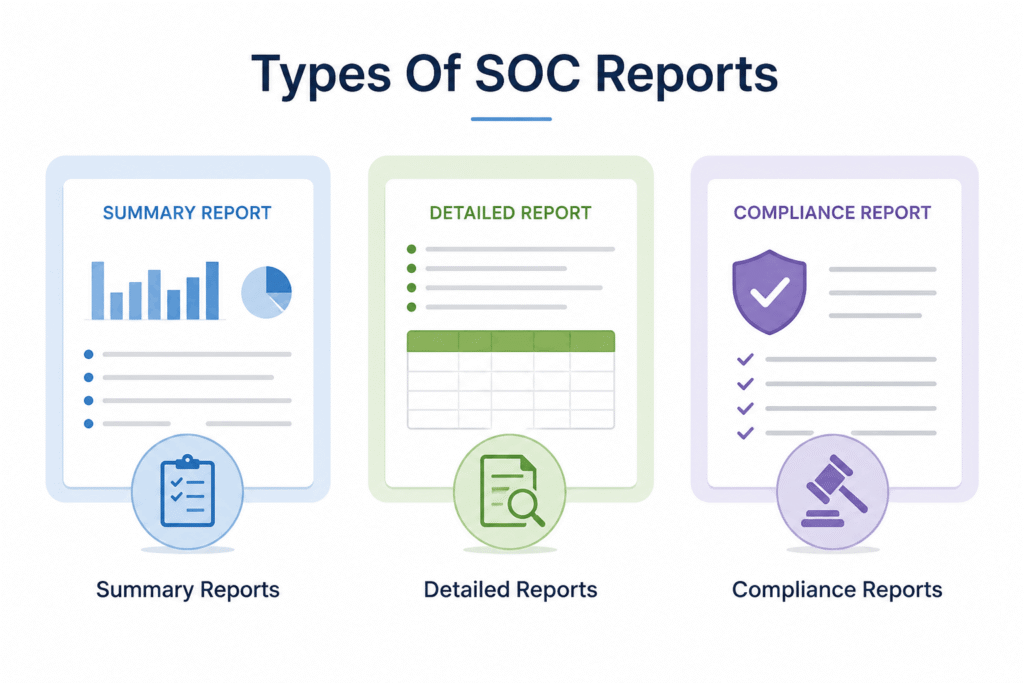
Types Of SOC Reports
There are different types of SOC reports designed for different business requirements.
SOC 1 Report
SOC 1 focuses on controls related to financial reporting.
This report is important for organizations whose services impact customer financial statements or accounting processes.
Examples include:
- Payroll providers
- Financial service platforms
- Loan servicing companies
- Accounting software providers
SOC 1 reports are commonly used for SOX compliance requirements.
If you want a deeper comparison, you can also read our guide on SOC 1 vs SOC 2 differences.
SOC 2 Report
SOC 2 is the most widely requested compliance report for technology companies.
It evaluates controls related to:
- Security
- Availability
- Confidentiality
- Privacy
- Processing Integrity
SOC 2 compliance is especially important for SaaS companies, cloud providers, and IT service organizations handling customer data.
Organizations preparing for SOC 2 audits often strengthen their security assessment and compliance processes to improve operational maturity.
SOC 3 Report
SOC 3 is a public facing version of SOC 2.
It provides a high level overview of the company’s security controls without revealing detailed audit findings.
Many organizations use SOC 3 reports for marketing and trust building purposes.
SOC 1 Vs SOC 2
Businesses often confuse SOC 1 and SOC 2 reports.
The main difference is the audit focus.
SOC 1 evaluates controls related to financial reporting.
SOC 2 focuses on cybersecurity, operational security, and customer data protection.
If your business stores or processes customer information in cloud platforms or SaaS applications, SOC 2 is usually more relevant.
Businesses using platforms like Microsoft 365 should also focus on identity protection, governance, and data protection strategies such as Microsoft 365 security assessments.
SOC 2 Type 1 Vs Type 2
SOC 2 reports are divided into Type 1 and Type 2 categories.
SOC 2 Type 1
SOC 2 Type 1 evaluates whether security controls are properly designed at a specific point in time.
It focuses on the design of the controls rather than long term performance.
This type of report is often used by businesses beginning their compliance journey.
SOC 2 Type 2
SOC 2 Type 2 evaluates whether the controls operate effectively over a defined audit period.
Auditors review evidence, test samples, and evaluate operational consistency over several months.
In my experience, most enterprise customers prefer SOC 2 Type 2 because it demonstrates ongoing operational effectiveness rather than a single point in time review.
SOC 2 Type 2 reports are especially valuable for SaaS providers, cloud companies, and organizations delivering managed security services.
SOC 2 Trust Services Criteria
SOC 2 audits are based on Trust Services Criteria.
These criteria help evaluate the effectiveness of a company’s security and compliance practices.
Security
Protection against unauthorized access and cyber threats.
Availability
Ensuring systems remain operational and accessible.
Confidentiality
Protection of sensitive and restricted information.
Processing Integrity
Ensuring systems process data accurately and reliably.
Privacy
Managing personal information responsibly and securely.
Security is mandatory in SOC 2 audits, while the remaining criteria depend on business requirements.
You can explore this topic further in our detailed guide on SOC 2 Trust Principles explained with real world examples.
What Does A SOC Report Include
A SOC report contains detailed information about the organization’s systems, controls, and audit findings.
Common sections include:
- Auditor opinion
- Security policies
- Risk management processes
- Access control procedures
- Incident response practices
- Data protection controls
- Monitoring and logging activities
- Disaster recovery procedures
- Management assertions
- Control testing results
These reports help customers and auditors evaluate whether the organization follows strong cybersecurity and operational practices.
Businesses improving their compliance posture often combine SOC initiatives with broader cloud security assessments and risk management reviews.
Why Companies Request SOC Reports From Vendors
Organizations increasingly rely on external vendors for cloud infrastructure, software, and data management services.
Because of this, vendor risk management has become a major priority.
Companies request SOC reports to:
- Validate vendor security controls
- Assess third party cybersecurity risks
- Meet internal compliance requirements
- Support procurement reviews
- Verify operational reliability
- Reduce supply chain security risks
Enterprise customers often review SOC reports before approving contracts with SaaS providers or managed service organizations.
Companies offering managed IT and security operations services are frequently required to provide security assurance documentation during enterprise onboarding.
What Is A Qualified SOC Report
The auditor’s opinion in a SOC report is very important.
Unqualified Opinion
An unqualified opinion means the auditor found the controls were properly designed and operating effectively.
This is considered a positive audit outcome.
Qualified Opinion
A qualified opinion indicates there were significant issues or control failures identified during the audit.
Organizations reviewing the report should evaluate the risks associated with those findings.
Adverse Opinion
An adverse opinion means major control failures exist and the organization may not meet the required compliance standards.
Businesses should investigate whether remediation efforts, additional controls, or compensating safeguards have been implemented.
Industries That Require SOC Compliance
SOC compliance is becoming important across many industries.
Industries commonly requesting SOC reports include:
- SaaS companies
- Financial technology businesses
- Healthcare platforms
- Ecommerce providers
- Cloud hosting companies
- Managed IT service providers
- Cybersecurity firms
- Data centers
- Payroll service providers
Even small businesses increasingly pursue SOC compliance to remain competitive in enterprise markets.
Organizations operating in regulated environments also benefit from stronger data security strategies and governance frameworks.
When Does A Business Need A SOC Report
A business may need a SOC report when:
- Enterprise customers request compliance documentation
- Vendors must pass security assessments
- Customer contracts require compliance audits
- Organizations handle sensitive customer data
- Businesses want to improve trust and transparency
- Investors require stronger governance practices
For many cloud and SaaS companies, SOC compliance becomes necessary as the business grows.
Companies scaling their cloud infrastructure often align SOC initiatives with Zero Trust and cloud security assessments.
What Is SOC Readiness Assessment
Before starting a SOC audit, many businesses complete a SOC readiness assessment.
This process helps identify security and compliance gaps before the official audit begins.
A SOC readiness assessment may include:
- Policy reviews
- Risk assessments
- Access control evaluations
- Security documentation analysis
- Incident response reviews
- Compliance gap identification
Readiness assessments help organizations prepare for successful SOC audits while improving their overall cybersecurity posture.
Businesses seeking stronger compliance maturity often work with experienced cybersecurity consulting and advisory partners to streamline preparation efforts.
Benefits Of SOC Compliance
SOC compliance provides both operational and business advantages.
Improves Customer Trust
Customers prefer working with organizations that follow audited security controls.
Strengthens Cybersecurity
Preparing for SOC audits encourages businesses to improve security practices and internal governance.
Supports Business Growth
SOC compliance can help businesses qualify for larger enterprise contracts.
Reduces Vendor Risk
Organizations can better manage third party security risks and compliance expectations.
Enhances Competitive Advantage
SOC compliant companies often stand out in crowded SaaS and technology markets.
Businesses adopting proactive security models such as Zero Trust architecture principles are often better prepared for long term compliance success.
Final Thoughts
Understanding what is SOC report is essential for modern businesses operating in cloud driven environments.
A SOC report is more than a compliance document. It is a demonstration of trust, operational maturity, and cybersecurity responsibility.
As organizations continue adopting cloud technologies and outsourcing critical services, SOC compliance will play an even bigger role in vendor management, enterprise procurement, and customer trust.
Businesses that invest in strong security controls, compliance frameworks, and operational transparency will be better positioned to grow securely and compete in today’s digital economy.
Companies looking to strengthen cybersecurity governance and compliance readiness should also evaluate broader areas such as cloud security challenges, identity management, and continuous monitoring practices.
