
SOC 2 Trust Principles Explained with Real-World Examples
When businesses evaluate vendors today, one question always comes up. Can this organization truly be trusted with sensitive data
This is where soc 2 trust principles become critical. They are not just compliance requirements. They define how your systems protect, process, and manage customer data in real environments.
From my experience working with cloud and security driven organizations, most companies struggle with SOC 2 not because of tools, but because they do not fully understand these principles in practice.
Let us break them down in a simple and practical way.
What Are SOC 2 Trust Principles
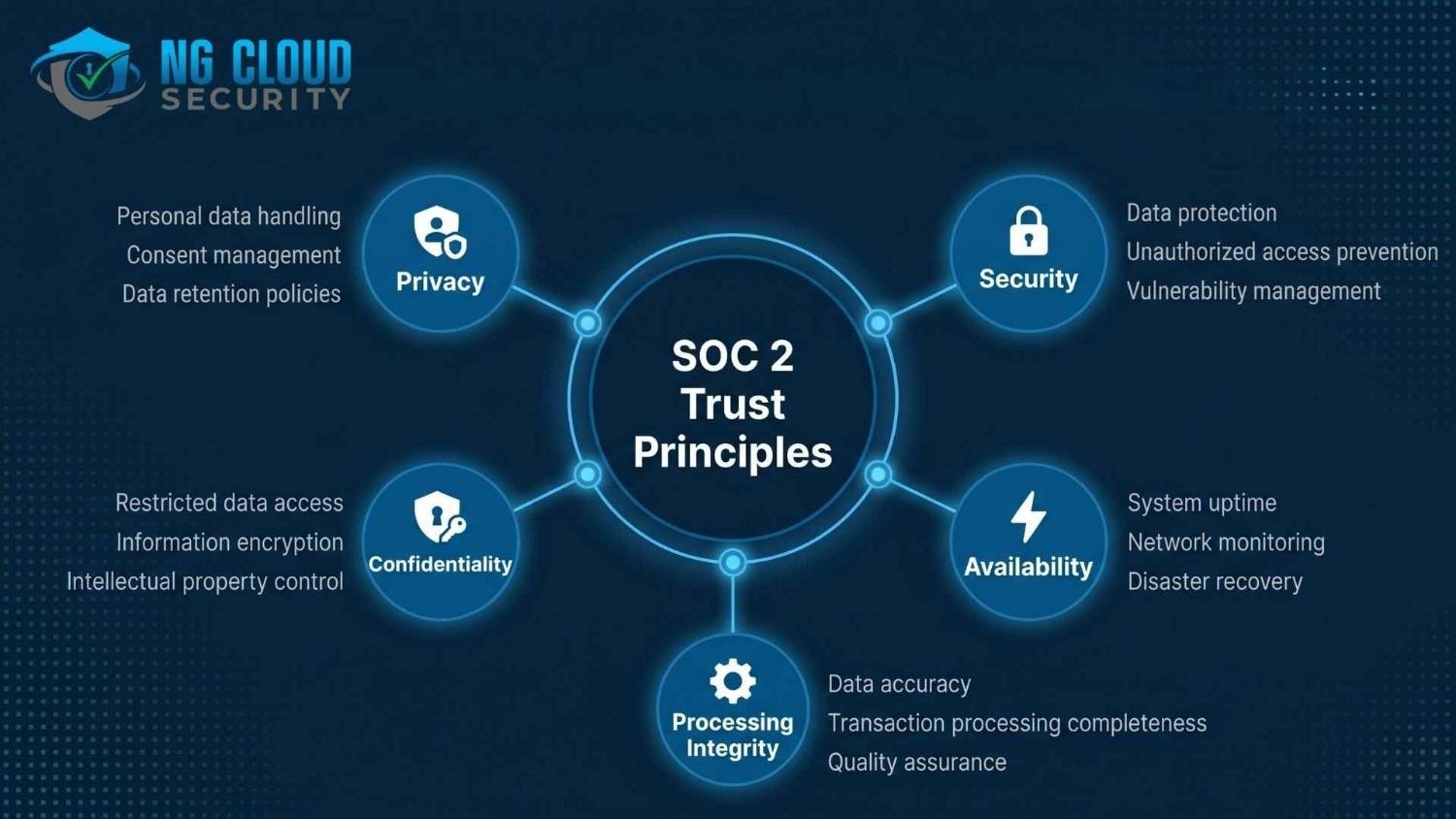
SOC 2 trust principles, also known as Trust Services Criteria, are defined by AICPA to evaluate how organizations manage data security and system controls.
There are five core principles:
- Security
- Availability
- Processing integrity
- Confidentiality
- Privacy
One important detail many businesses miss is that only security is mandatory. The remaining principles depend on your services, data handling, and compliance requirements.
If you are new to SOC frameworks, understanding the difference between reports can also help. You can explore this in detail in our guide on SOC 1 vs SOC 2 difference.
1. Security – The Foundation of SOC 2
Security is the backbone of all SOC 2 trust principles. It ensures systems are protected from unauthorized access and threats.
In real world scenarios, this includes:
- Identity and access management
- Multi factor authentication
- Continuous monitoring
- Network and endpoint protection
For example, a SaaS company may restrict access to production systems and monitor every login attempt using SIEM tools like Microsoft Sentinel.
If you want to understand how modern security operations work, you can also explore managed SOC services.
Industry best practices from organizations like AICPA also emphasize continuous monitoring and risk assessment as core security controls.
2. Availability – Ensuring Systems Are Always Accessible
Availability ensures that systems remain operational and accessible as promised.
It is not about zero downtime. It is about resilience and recovery.
A real world example is a cloud platform using:
- Backup infrastructure
- Disaster recovery planning
- Load balancing
If systems fail during peak usage, it directly impacts revenue and customer trust.
This is why many organizations align availability with modern architectures like cloud security solutions to ensure reliability and scalability.
3. Processing Integrity – Accuracy Matters More Than You Think
Processing integrity ensures that systems process data correctly, completely, and on time.
This principle is essential for businesses handling:
- Financial transactions
- Data processing platforms
- Automated workflows
For example, a payment system must ensure transactions are accurate. Even a small error can lead to financial loss or disputes.
Organizations typically implement validation checks, logging, and automated testing to maintain processing accuracy.
Standards like ISO 27001 also reinforce strong data processing and integrity controls.
4. Confidentiality – Protecting Sensitive Business Information
Confidentiality focuses on protecting sensitive data from unauthorized access.
This includes:
- Business contracts
- Intellectual property
- Internal communications
For example, a company storing legal or financial data ensures encryption and restricts access to only authorized users.
To strengthen confidentiality, businesses often implement identity controls and data classification strategies. You can learn more in our guide on identity and access management.
A common mistake is confusing confidentiality with security. Security protects systems overall, while confidentiality protects specific sensitive data.
5. Privacy – Managing Personal Data Responsibly
Privacy focuses on how personal data is collected, used, and stored.
This includes:
- Customer names
- Email addresses
- Payment information
A practical example is a web application that clearly asks for user consent and allows users to control their data.
With increasing regulations, privacy is becoming a key factor in business trust.
Frameworks like GDPR define how organizations should handle personal data and user rights.
How to Choose the Right SOC 2 Trust Principles
One major gap I often see is companies trying to implement all five principles without understanding their relevance.
You should choose based on:
- Type of service you offer
- Nature of data you handle
- Customer expectations
- Regulatory requirements
For example:
- SaaS platforms typically include security, availability, and confidentiality
- Fintech companies must include processing integrity
- Consumer platforms must include privacy
If you are planning compliance, starting with a proper security assessment and compliance strategy can save time and cost.
Why SOC 2 Trust Principles Matter for Business Growth
SOC 2 is not just about compliance. It is about building trust.
Organizations that align with SOC 2 trust principles often achieve:
- Faster deal closures
- Stronger enterprise credibility
- Reduced security risks
- Better operational efficiency
Customers today expect proof of security, not just claims.
Final Thoughts
SOC 2 trust principles provide a clear framework for building secure and reliable systems.
From my experience, the best approach is to treat SOC 2 as an ongoing strategy instead of a one time project.
Start with strong security controls, align other principles based on your business needs, and continuously improve your processes.
That is how you move beyond compliance and turn trust into a real business advantage.
Ready to Achieve SOC 2 Compliance with Confidence?
Get a personalized assessment of your current security posture and identify exactly what you need to meet SOC 2 trust principles.
