
7 Best Endpoint Security Software for Small Business Growth in 2026
Small businesses are increasingly becoming targets for cyberattacks because they often lack dedicated security teams and advanced protection tools. A single infected laptop or employee device can expose customer records, financial information, and cloud applications.
This is where endpoint security software becomes essential.
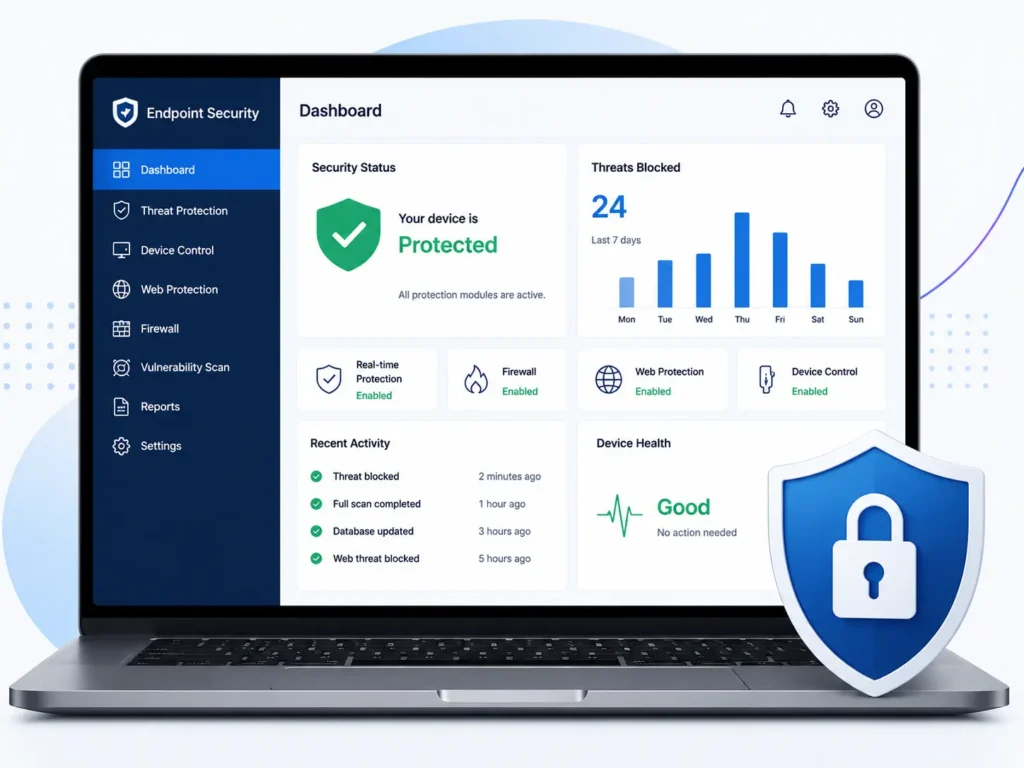
Endpoint security software helps protect all devices connected to your business network, including desktops, laptops, mobile devices, and remote employee systems. It goes beyond traditional antivirus by adding advanced threat detection, ransomware defense, centralized management, and policy based security controls.
In my experience, many growing businesses adopt cloud applications quickly but overlook endpoint protection until a security incident happens. Choosing the right solution early helps prevent downtime, compliance issues, and financial loss. Businesses exploring a broader security strategy often start with an endpoint security service that combines technology with expert monitoring.
What Is Endpoint Security Software
Endpoint security software is a cybersecurity solution designed to protect endpoints such as employee computers, servers, smartphones, and virtual devices from cyber threats.
An endpoint protection platform typically includes:
Antivirus and malware prevention
Protects devices from viruses, trojans, spyware, and malicious software.
Ransomware protection
Detects suspicious behavior and blocks file encryption attacks.
Endpoint detection and response
EDR provides visibility into suspicious activity and helps security teams investigate incidents. If you are comparing tools, understanding the difference between EDR and antivirus can help clarify what modern platforms offer.
Device and application control
Allows organizations to restrict USB devices, unauthorized apps, and risky software installations.
Why Small Businesses Need Endpoint Security Software
Small businesses are attractive targets for attackers because they often operate with fewer controls than large enterprises.
Common risks include:
Phishing attacks
Employees may click malicious links that install malware.
Remote work exposure
Home networks and unmanaged devices increase risk.
Data theft
Compromised endpoints can expose business documents and customer records.
Compliance challenges
Industries handling sensitive data require stronger endpoint monitoring. Organizations that want to validate readiness often perform an endpoint security assessment before choosing a platform.
A proper endpoint security platform reduces these risks while supporting secure business growth.
7 Best Endpoint Security Software for Small Business
1. Microsoft Defender for Business
Microsoft Defender for Business is one of the most practical choices for organizations already using Microsoft 365.
It offers:
- AI based threat detection
- Attack surface reduction
- Endpoint detection and response
- Centralized policy management
- Integration with Microsoft Intune
For businesses using Microsoft Business Premium, it can be a highly cost effective option. Teams looking for extended visibility may also explore Microsoft Defender for XDR for broader detection and response.
Best for: Microsoft ecosystem users
2. Sophos Intercept X
Sophos Intercept X is widely recognized for advanced ransomware defense and exploit prevention.
Key strengths:
- Deep learning malware detection
- Anti ransomware rollback
- Managed threat response
- Cloud based dashboard
Best for: Strong ransomware protection
3. Bitdefender GravityZone
Bitdefender GravityZone provides layered endpoint protection for small and medium businesses.
Features include:
- Risk analytics
- Patch management
- Web threat protection
- Lightweight endpoint agent
Best for: Cost effective security
4. CrowdStrike Falcon
CrowdStrike Falcon is a cloud native endpoint security platform trusted by many enterprises.
It delivers:
- Real time threat intelligence
- Managed detection and response
- EDR and XDR
- Threat hunting capabilities
Best for: Advanced threat visibility
5. SentinelOne Singularity
SentinelOne uses AI driven detection to identify and stop malicious activity automatically.
It includes:
- Autonomous threat response
- Behavioral analysis
- Device isolation
- Incident rollback
Best for: Automation focused security teams
6. ESET Protect
ESET Protect is popular among small businesses because it offers strong protection with low system resource usage.
Advantages:
- Easy deployment
- Multi device support
- Low performance impact
- Centralized administration
Best for: Small IT teams
7. Trend Micro Vision One
Trend Micro Vision One combines endpoint protection with broader security visibility.
Highlights:
- Email and endpoint security
- Threat correlation
- Vulnerability protection
- Cloud management
Best for: All in one security needs
Key Features to Look for in Endpoint Security Software
When evaluating endpoint security software, small businesses should prioritize these features.
Centralized management
A single dashboard makes it easier to monitor all devices.
Endpoint detection and response
EDR helps identify advanced attacks that bypass standard antivirus.
Patch management
Unpatched software remains one of the most common attack vectors.
Application control
Restricting unauthorized software improves security posture.
Scalability
The platform should support future expansion as your team grows.
Endpoint Security Software vs Traditional Antivirus
Many businesses still rely only on antivirus tools, but there is a major difference.
Traditional antivirus focuses mainly on known malware signatures. Endpoint security software adds behavioral analytics, device control, and centralized incident response. For a deeper explanation, see types of endpoint security to understand how EDR and XDR evolved.
How to Choose the Right Endpoint Security Solution
The best choice depends on your infrastructure, team size, and compliance requirements.
In my experience, businesses should evaluate:
Existing technology stack
If you use Microsoft 365, Defender can provide strong integration.
Security maturity
Organizations with limited in house security teams may benefit from managed solutions such as managed SOC services for continuous monitoring.
Budget
Some platforms offer enterprise features but may be costly for small businesses.
Compliance needs
Healthcare, finance, and legal sectors often require stronger endpoint monitoring and reporting.
Final Thoughts
The right endpoint security software can protect your business from ransomware, phishing, insider threats, and device compromise while supporting long term growth.
For many small businesses, Microsoft Defender for Business, Sophos Intercept X, and Bitdefender GravityZone provide an excellent balance of security and cost.
As cyber threats continue to evolve, endpoint protection is no longer optional. It is a core business requirement for protecting operations, customer trust, and future scalability. If you are building a long term cyber resilience strategy, combining endpoint protection with a cybersecurity consulting approach helps align technology, governance, and compliance.
