
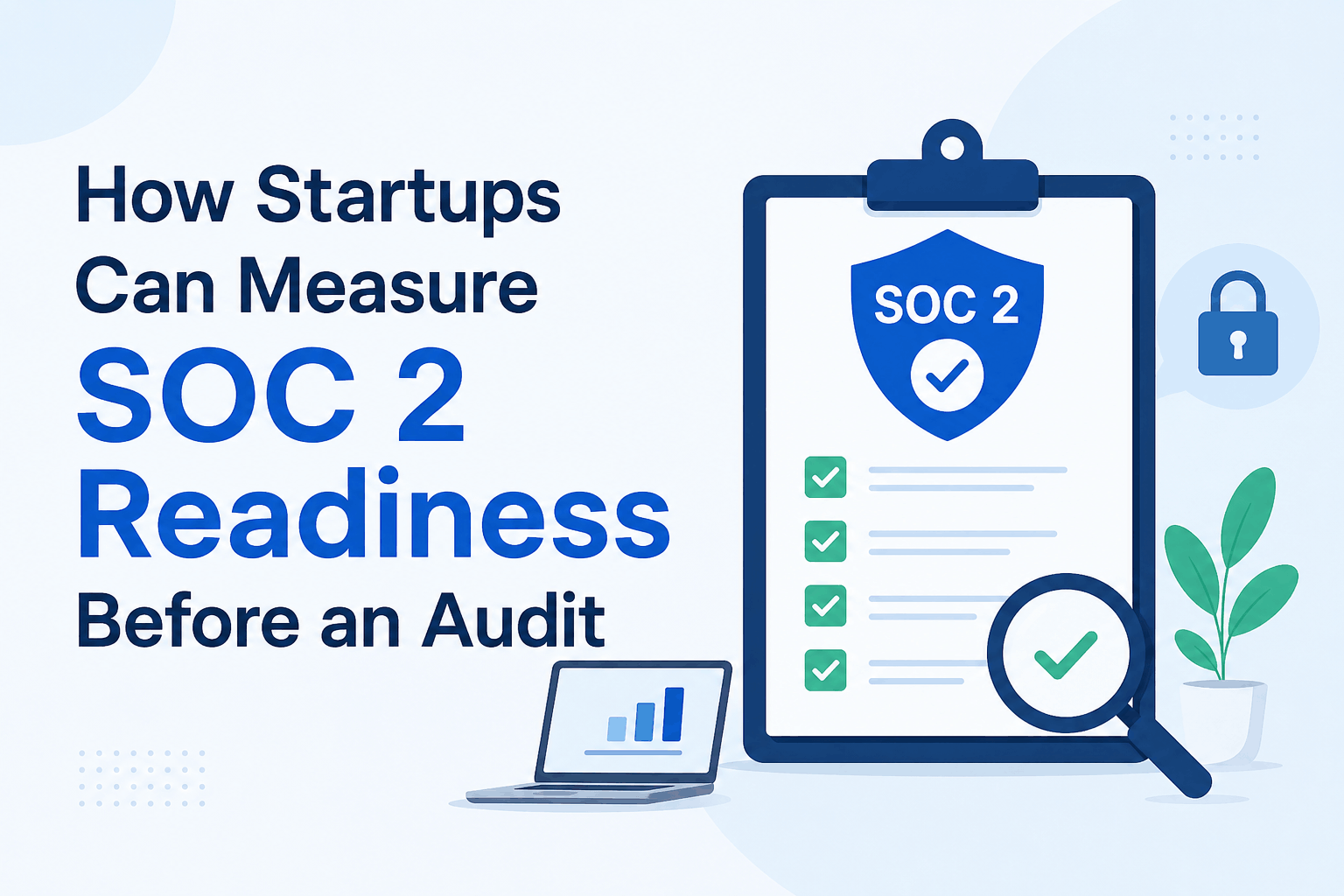
How Startups Can Measure SOC 2 Readiness Before an Audit
For startups trying to work with enterprise customers, SOC 2 compliance is becoming more than a security requirement. It is often a trust signal that shows customers, partners, and stakeholders that the company takes data protection seriously.
However, preparing for a SOC 2 audit without understanding your current security maturity can create unnecessary delays. Many startups begin the audit process and later discover gaps in access management, documentation, monitoring, or internal security processes.
A SOC 2 readiness assessment helps companies understand where they currently stand before entering the formal audit process. By measuring readiness early, startups can fix security gaps, organize evidence, and create a smoother path toward compliance.
What Is SOC 2 Readiness Assessment?
SOC 2 readiness assessment is the process of reviewing your existing security controls against SOC 2 Trust Services Criteria before an official audit begins.
The purpose is not to achieve certification immediately. Instead, it helps identify areas that require improvement and prepares your organization for auditor expectations.
A proper readiness review looks at how your startup manages security operations, protects customer data, controls user access, handles incidents, and maintains compliance documentation.
For growing companies, this step provides visibility into their overall security posture and helps avoid surprises during the audit.
Why Startups Should Measure SOC 2 Readiness Before an Audit
Many startups focus on building products, acquiring customers, and scaling operations. Security processes often grow alongside the business, which means important controls may not always be properly documented or consistently followed.
Before an audit, startups should understand whether their current security practices can meet SOC 2 requirements.
- A readiness assessment helps answer important questions:
- Are security policies documented and actively followed?
- Do employees have only the access they need?
- Can the company provide evidence for implemented controls?
- Are security incidents detected and handled properly?
- Are third party vendors creating compliance risks?
Understanding these areas early allows teams to create a practical improvement plan instead of rushing before the audit.
Key Areas That Determine SOC 2 Readiness
Security Policies and Compliance Documentation
SOC 2 requires organizations to demonstrate that security processes are defined, maintained, and followed.
Startups should review whether they have updated policies for information security, access control, incident response, risk management, and employee security awareness.
Documentation alone is not enough. Auditors usually look for proof that these processes are actively implemented.
A readiness assessment helps identify missing policies and gaps between written procedures and actual security operations.
Identity Access Management and User Controls
Access management is one of the most important parts of SOC 2 preparation.
As startups grow, more employees, contractors, and applications gain access to business systems. Without proper controls, unnecessary permissions can increase security risks.
Companies should evaluate their user lifecycle management, privileged access controls, authentication methods, and access review process.
Strong identity management practices also support broader security strategies like zero trust security and modern cloud protection.
Startups can strengthen these areas through structured security reviews such as a cloud security assessment that identifies configuration weaknesses and access related risks.
Security Monitoring and Incident Response
A startup may have strong security tools, but without monitoring and response procedures, detecting threats becomes difficult.
SOC 2 readiness requires organizations to show how they identify security events, investigate incidents, and respond effectively.
This includes reviewing logging practices, alert management, incident response plans, and security ownership.
A mature security monitoring process helps create reliable audit evidence and improves overall operational resilience.
How to Choose the Best SOC 2 Readiness Assessment Tool for Startups
Finding the best SOC 2 readiness assessment tool for startups depends on the company’s size, technology environment, and compliance goals.
The right solution should help teams identify control gaps, manage security evidence, track remediation tasks, and continuously monitor compliance progress.
A useful readiness platform should support areas such as compliance reporting, risk management, policy tracking, security control mapping, and audit preparation workflows.
Startups should avoid treating SOC 2 as a one time project. Security requirements continue to evolve as infrastructure, employees, and business operations change.
Using the right assessment approach allows teams to maintain continuous readiness instead of preparing only when an audit is approaching.
Common SOC 2 Preparation Mistakes Startups Should Avoid
One of the biggest mistakes startups make is assuming SOC 2 is only about creating policies.
In reality, successful compliance depends on building repeatable security processes.
Companies often struggle because they begin too late, fail to assign compliance ownership, do not maintain evidence regularly, or overlook third party security risks.
Another challenge is managing security across cloud environments. As businesses scale, they need proper controls around infrastructure, applications, and data protection.
A structured security assessment approach can help startups improve visibility and strengthen their compliance foundation.
Building a Strong SOC 2 Readiness Strategy
A successful SOC 2 preparation journey usually starts with understanding the current state.
Startups should perform a gap assessment, map existing controls to SOC 2 requirements, prioritize improvements, and continuously collect evidence.
Compliance becomes much easier when security practices are integrated into daily operations.
Organizations that build strong foundations around identity protection, monitoring, data security, and risk management are better prepared for audits and customer expectations.
Final Thoughts
Measuring SOC 2 readiness before an audit gives startups a clear understanding of their security maturity and compliance position.
Instead of discovering issues during the audit process, companies can identify weaknesses early, improve controls, and approach certification with confidence.
The best SOC 2 readiness assessment tool for startups should help simplify compliance preparation, improve visibility, and support continuous security improvement.
A proactive SOC 2 strategy not only helps achieve compliance but also builds customer trust and creates a stronger security foundation for long term growth.
