

What Does Zero Trust Mean in Cyber Security Strategy
When enterprise leaders ask me how long does cloud migration take, I usually pause before answering. Not because the question is unclear, but because the timeline depends on many moving parts. In real enterprise environments, cloud migration is not a single project. It is a transformation that touches applications, infrastructure, security, compliance, and people.
From my experience, organizations that understand the journey upfront move with more confidence and face fewer surprises later.
What Cloud Migration Really Means for Enterprises
Cloud migration is often misunderstood as simply moving servers to the cloud. In reality, it involves assessing existing systems, understanding dependencies, modernizing applications where required, and designing a secure cloud foundation.
Many enterprises begin this journey by first understanding the types of cloud migration approaches available, as not every workload should be treated the same. Choosing the right approach early helps reduce delays and unnecessary costs later.
Typical Cloud Migration Timeline for Enterprises
So how long does cloud migration take in practical terms. For most enterprises, the complete journey typically takes between six months and eighteen months. The timeline becomes clearer when broken down into phases.
Assessment and Planning Phase
This phase usually takes one to three months. Applications are reviewed, dependencies are mapped, and risks are identified. In my experience, enterprises that perform a thorough assessment early avoid major disruptions during execution.
This is also the stage where many organizations carry out a cloud security assessment to identify gaps related to data protection, access control, and compliance before workloads move to the cloud.
Architecture and Security Design
Once planning is complete, architecture and security design typically takes one to two months. This phase defines identity management, network segmentation, data protection, and governance policies.
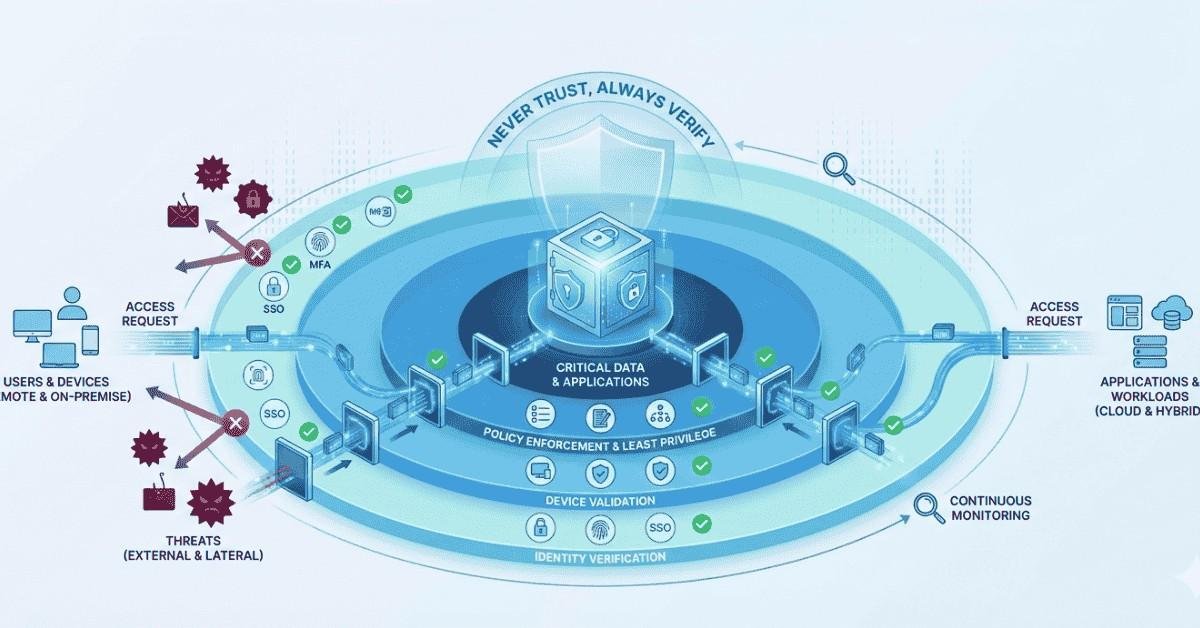
Enterprises that align their architecture with Zero Trust security principles at this stage tend to experience smoother migrations and stronger post migration security posture.
Pilot Migration or Proof of Concept
A pilot migration usually runs for four to eight weeks. A small set of applications is migrated to validate performance, security controls, and operational readiness.
For organizations adopting Microsoft Azure, this phase often includes building a structured Azure landing zone that serves as the foundation for all future workloads.
Full Scale Migration Execution
This is the longest phase and often takes three to nine months. Applications are migrated in waves, data is validated, and users are gradually onboarded.
Enterprises migrating large workloads to Azure often rely on Azure migration services to streamline execution, reduce manual effort, and minimize downtime during this phase.
Optimization and Stabilization
After workloads are live, optimization continues for one to three months. Costs are reviewed, performance is tuned, and security controls are strengthened.
Many enterprises choose ongoing cloud managed services to ensure stability, visibility, and continuous improvement after migration.
Factors That Influence Cloud Migration Duration
No two enterprises have the same timeline. Several factors directly affect how long cloud migration takes.
Application Complexity
Legacy applications with tight dependencies take more time to migrate. In many cases, organizations need to invest in application modernization to improve scalability and long term performance.
Data Security and Compliance Requirements
Enterprises handling sensitive data must prioritize encryption, monitoring, and governance. Strong data security practices often add time to the migration but significantly reduce risk.
Internal Readiness and Skills
Enterprises with trained internal teams usually move faster. When teams are new to cloud platforms, timelines increase due to learning curves and process changes.
Operational Maturity
Organizations with established processes transition more smoothly, especially when supported by managed IT and security operations that provide monitoring and incident response during and after migration.
Can Enterprises Migrate Faster Without Increasing Risk
Yes, but only with the right strategy. Enterprises that follow a structured and seamless cloud migration approach reduce rework and post migration issues.
Speed should never come at the cost of security or governance. In my experience, a balanced approach delivers better long term results than rushing to meet aggressive timelines.
Final Thoughts
So how long does cloud migration take for enterprises. In most real world scenarios, six to eighteen months is a realistic expectation. The exact timeline depends on application complexity, security requirements, internal readiness, and decision making speed.
From my experience, enterprises that treat cloud migration as a strategic business initiative rather than a technical task achieve stronger security, better cost control, and sustainable growth. Cloud migration is not about moving fast. It is about moving smart and building a foundation that supports the business for years to come.
