
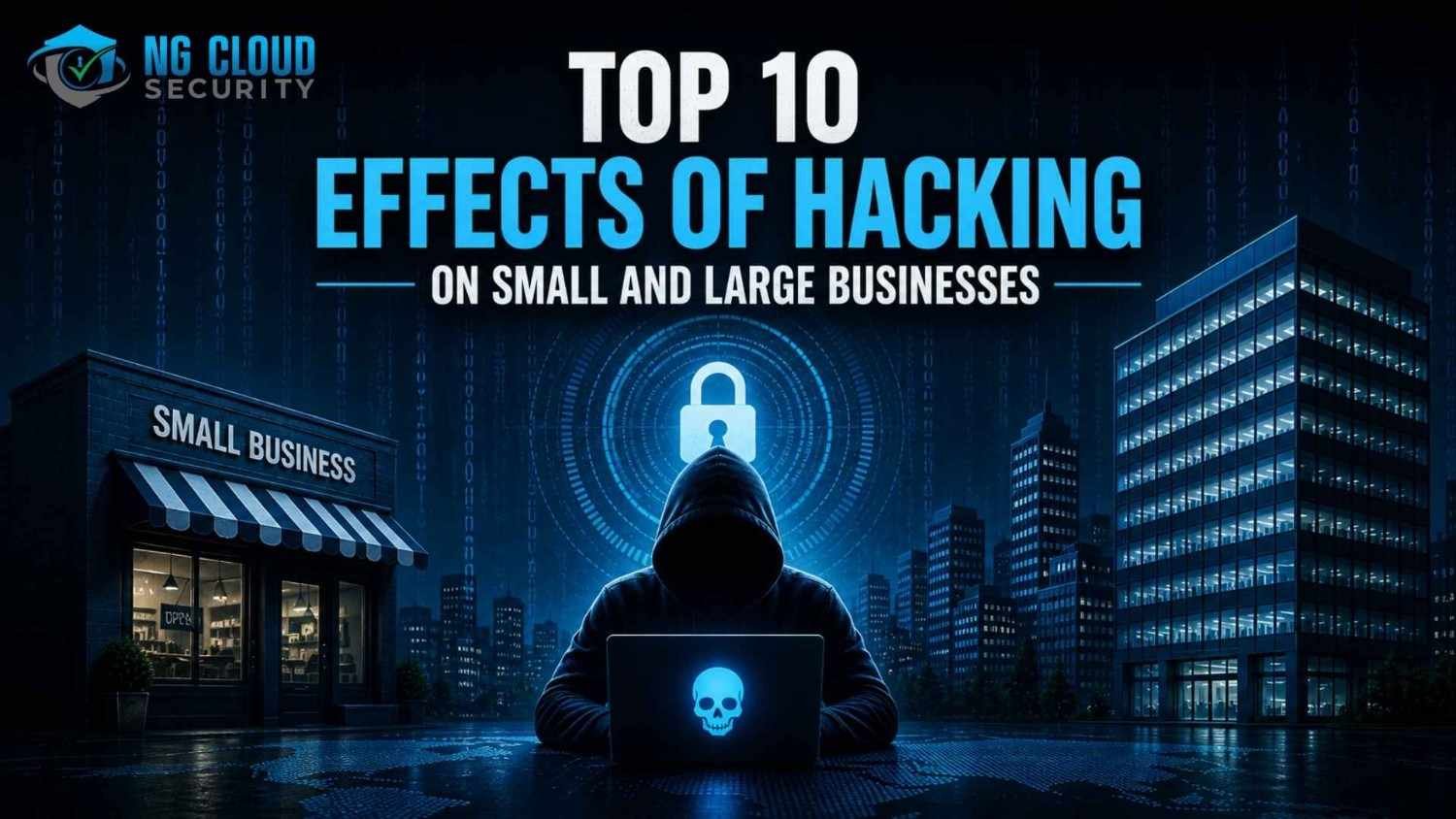
Top 10 Effects Of Hacking On Small And Large Businesses
The effects of hacking are no longer limited to large enterprises. Today, small startups, growing companies, and global organizations all face cyber risks that can impact revenue, operations, and trust. In my experience, many business owners only think about cyberattacks after an incident has already disrupted their business. By then, the cost is often much higher than expected.
Modern businesses depend on cloud applications, digital communication, customer databases, and remote access. This makes every organization a potential target. Understanding the effects of hacking helps decision makers prepare before a security incident becomes a business crisis.
For organizations strengthening their overall security posture, investing in cloud security services can reduce many of the common risks associated with cyberattacks.
Why Hacking Affects Both Small And Large Businesses
Hackers do not only target big brands. Small businesses are often seen as easier targets because they may lack dedicated security teams, advanced monitoring, or formal incident response plans. Large enterprises, on the other hand, hold massive volumes of sensitive customer and operational data, which makes them attractive for more advanced attacks.
This means the effects of hacking can be severe regardless of company size.
Top 10 Effects Of Hacking
1. Financial Loss
One of the biggest effects of hacking is direct financial damage. Businesses may face stolen funds, ransomware payments, emergency recovery costs, legal expenses, and operational losses.
2. Loss Of Customer Trust
When customer information is exposed, trust can decline quickly. Many customers choose not to return after a data breach, especially if the organization fails to communicate transparently.
3. Business Downtime
Cyberattacks can stop websites, email systems, cloud applications, and internal networks. Even a few hours of downtime can affect sales and service delivery.
Businesses implementing managed SOC services often reduce downtime through continuous monitoring and faster threat response.
4. Data Breach
Sensitive records such as employee files, financial documents, contracts, and customer information can be stolen or leaked. This often leads to regulatory consequences.
5. Brand Reputation Damage
A public breach can quickly damage a company’s reputation. News spreads fast, and customers may lose confidence in the business.
6. Compliance Penalties
Organizations in sectors such as healthcare, finance, and ecommerce may face regulatory fines after a breach. Privacy laws increasingly require strong security controls.
A proactive security assessment can help identify risks before they lead to compliance issues.
7. Intellectual Property Theft
Hackers may steal designs, business plans, research data, and proprietary software. This can impact long term competitiveness.
8. Productivity Loss
Employees often lose access to systems during an attack. Internal teams are forced to focus on recovery rather than regular business operations.
9. Recovery Costs
After a breach, businesses may need forensic investigation, external consultants, security upgrades, and system restoration. Recovery often costs more than prevention.
10. Long Term Security Challenges
A cyberattack usually exposes hidden weaknesses. Businesses may need to redesign access policies, train staff, and adopt stronger identity controls.
Organizations adopting Zero Trust security services are often better positioned to reduce long term cyber risks.
Effects Of Hacking On Small Businesses
Small businesses may suffer the most because limited resources make recovery difficult. A single ransomware attack can stop billing, customer communication, and daily operations.
For many growing organizations, improving endpoint security is one of the first steps to reducing these risks.
Effects Of Hacking On Large Businesses
Large enterprises often have more mature security programs, but the impact of a breach is broader. Attacks may affect multiple locations, thousands of employees, and millions of customers.
Advanced environments often benefit from Microsoft Sentinel for centralized security monitoring and incident response.
How To Reduce The Effects Of Hacking
Build Strong Security Foundations
Use identity management, multi factor authentication, secure backups, and regular patching.
Train Employees
Many attacks begin with phishing emails. Security awareness training reduces human error.
Monitor Continuously
Continuous threat monitoring helps businesses detect attacks earlier.
Learn more about email security best practices to reduce phishing based attacks.
Follow Zero Trust Principles
Modern organizations are moving toward access verification models. You can also explore what are the three principles of zero trust architecture for deeper understanding.
Final Thoughts
The effects of hacking go beyond technical disruption. They impact business continuity, customer trust, legal compliance, and long term growth. Whether a company is small or large, the consequences of ignoring cybersecurity can be costly.
From my experience, organizations that invest in proactive cybersecurity strategy recover faster and protect business value more effectively.
Want a simple checklist to protect your organization from common cyberattacks? Download our free one page guide, How To Save Your Business From Hacking, and learn the practical steps every business should follow to reduce security risks.
