

What Is Ping Of Death Attack And How Does It Work
Cybersecurity threats continue to evolve every year, but some classic attack methods still remain important for businesses and IT teams to understand. One of those attacks is the Ping of Death attack. While modern operating systems are far more secure today, this attack still plays an important role in cybersecurity education, network defense planning, and vulnerability management.
In my experience working with enterprise security environments, many organizations focus heavily on advanced threats while ignoring older network level vulnerabilities that can still expose weak infrastructure. Understanding how a ping of death attack works helps businesses strengthen their security posture and improve network resilience.
What Is Ping Of Death Attack
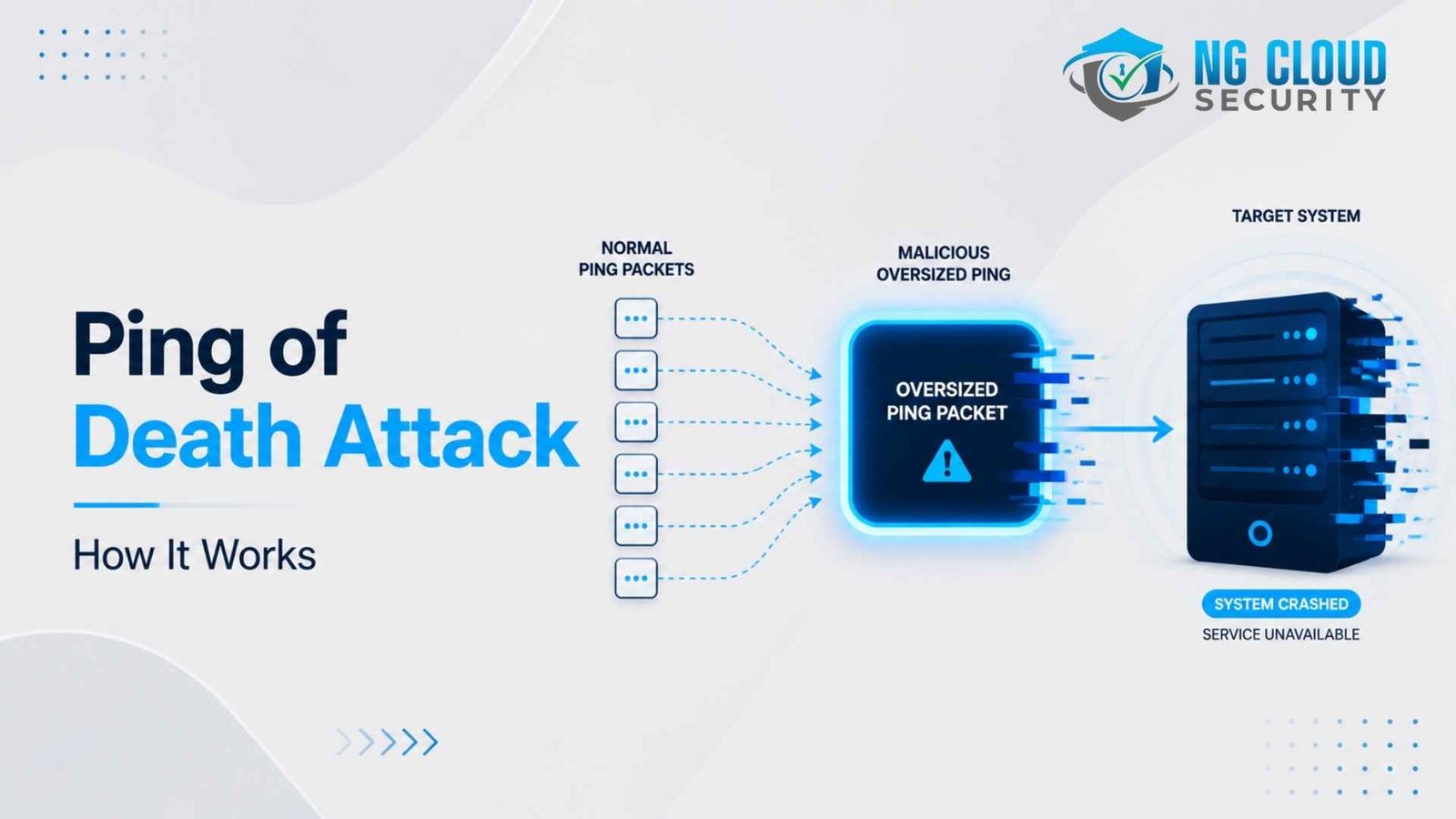
A ping of death attack is a type of Denial of Service attack that sends corrupted or oversized internet packets to a target system. The goal of the attack is to crash, freeze, or destabilize the targeted device, server, or network equipment.
The attack uses ICMP, which stands for Internet Control Message Protocol. Normally, ICMP is used for legitimate communication between devices. For example, when administrators use the ping command to test whether a server or website is reachable, ICMP packets are exchanged between systems.
A standard IP packet has a maximum size limit of 65,535 bytes. In a ping of death attack, attackers intentionally create packets larger than this limit. Vulnerable systems fail to process these packets correctly, causing system instability or crashes.
Businesses learning about network vulnerabilities often also explore topics like port scanning in cyber security because attackers commonly combine multiple reconnaissance and attack techniques together.
How Does Ping Of Death Attack Work
To understand the attack properly, it is important to know how data travels across networks.
Large amounts of data sent across the internet are divided into smaller fragments called packets. These packets are later reassembled by the receiving system. Attackers exploit this reassembly process.
The attacker first creates an oversized ICMP packet that exceeds the allowed IP size limit. Since the internet cannot directly transmit packets larger than the maximum limit, the attacker fragments the oversized packet into smaller pieces.
When the target machine receives these fragments, it attempts to reassemble them into the original oversized packet. Vulnerable systems cannot properly handle the oversized data during reassembly. This causes issues such as:
- System crashes
- Memory corruption
- Buffer overflow problems
- Device freezing
- Network service disruption
Older operating systems were especially vulnerable because they lacked proper packet validation mechanisms.
Organizations focused on improving network monitoring often use solutions such as Microsoft Sentinel to identify suspicious traffic patterns and abnormal network behavior before attacks escalate.
Why Ping Of Death Attack Was Dangerous
During the 1990s, the ping of death attack became one of the most well known network attacks because many operating systems could not safely process malformed packets.
The attack was highly effective because:
- It required very little effort from attackers
- It could impact multiple systems quickly
- Detection capabilities were limited
- Many systems lacked modern firewall protection
- Older servers were not designed for malformed traffic handling
At that time, even a single malicious ping request could disrupt enterprise operations.
This is why modern businesses now invest heavily in cloud security assessment services and proactive vulnerability management to identify weak infrastructure before attackers do.
Are Modern Systems Still Vulnerable
Most modern operating systems, firewalls, and enterprise security solutions can now detect and block malformed ICMP packets automatically. Updated systems validate packet sizes before processing them, reducing the effectiveness of this attack.
However, some risks still remain.
Legacy infrastructure, outdated network appliances, unsupported operating systems, and older IoT devices may still contain vulnerabilities related to malformed packet handling. In my experience, organizations with aging infrastructure often underestimate the security risks created by outdated devices connected to internal networks.
Attackers may also combine ping of death style techniques with modern Denial of Service attacks to increase operational disruption.
Businesses implementing Zero Trust security services generally reduce these risks because network traffic validation and access control become much stricter across the environment.
Common Signs Of Ping Of Death Attack
Early detection plays a major role in minimizing damage. Security teams should monitor for unusual ICMP related activity.
Sudden Network Slowdowns
Excessive malformed traffic may cause servers or network devices to respond slowly.
Frequent System Crashes
Systems vulnerable to malformed packet attacks may reboot unexpectedly or become unstable.
High ICMP Traffic Volume
Unusual spikes in ICMP traffic may indicate malicious activity targeting network infrastructure.
Firewall Or IDS Alerts
Modern firewalls and intrusion detection systems often detect oversized or suspicious ICMP packets automatically.
Organizations improving visibility into endpoint and network threats often benefit from Microsoft Defender for XDR solutions that provide centralized threat monitoring and incident correlation.
Difference Between Ping Of Death And Other DoS Attacks
Many people confuse ping of death attacks with general Denial of Service attacks. While both aim to disrupt services, their methods are different.
| Attack Type | Attack Method | Primary Objective |
| Ping Of Death | Oversized malformed packets | Crash vulnerable systems |
| SYN Flood Attack | Excessive TCP requests | Exhaust server resources |
| ICMP Flood | Massive ping requests | Consume bandwidth |
| UDP Flood | High UDP traffic volume | Overload network infrastructure |
The ping of death attack specifically exploits weaknesses in packet reassembly and packet size validation.
Businesses learning about modern attack methods may also find AI powered cyberattacks and defenses useful because attackers increasingly automate network attacks using intelligent tools.
How To Prevent Ping Of Death Attack
Preventing ping of death attacks requires a combination of network security controls, monitoring, and infrastructure management.
Keep Systems Updated
Security patches fix vulnerabilities related to malformed packet handling. Regular updates remain essential.
Use Enterprise Firewalls
Modern firewalls can detect suspicious ICMP traffic and block malicious packets before they reach internal systems.
Businesses securing hybrid environments often deploy Azure Firewall solutions to strengthen perimeter defense and traffic inspection.
Restrict Unnecessary ICMP Traffic
If external ping functionality is not required, organizations should limit ICMP exposure where possible.
Implement Intrusion Detection Systems
Intrusion detection and prevention systems help identify suspicious traffic patterns in real time.
For organizations evaluating monitoring solutions, this guide on advantages and disadvantages of intrusion detection systems provides additional insights.
Perform Regular Security Assessments
Routine vulnerability assessments help identify outdated systems, insecure configurations, and unsupported devices.
Organizations focused on improving overall cyber resilience often invest in security assessment and control services to strengthen defensive posture.
Why Understanding Legacy Attacks Still Matters
Many organizations assume old cyberattacks are no longer relevant. In reality, cybersecurity professionals must understand both historical and modern attack techniques.
Older attacks like ping of death teach important lessons about secure network design, packet validation, infrastructure hardening, and vulnerability management. Many modern Denial of Service attacks still rely on similar concepts involving protocol abuse and traffic manipulation.
From my experience, organizations with strong foundational security practices are much better prepared to handle evolving cyber threats.
Final Thoughts
The ping of death attack remains one of the earliest examples of how malformed network traffic can disrupt vulnerable systems. Although modern security technologies have reduced its effectiveness, outdated infrastructure can still remain exposed.
Understanding how ping of death attacks work helps businesses strengthen network defenses, improve traffic monitoring, and reduce security vulnerabilities before attackers exploit them.
As cyber threats continue evolving, organizations should focus on proactive cybersecurity strategies that include network monitoring, patch management, endpoint protection, and continuous security assessments.
