
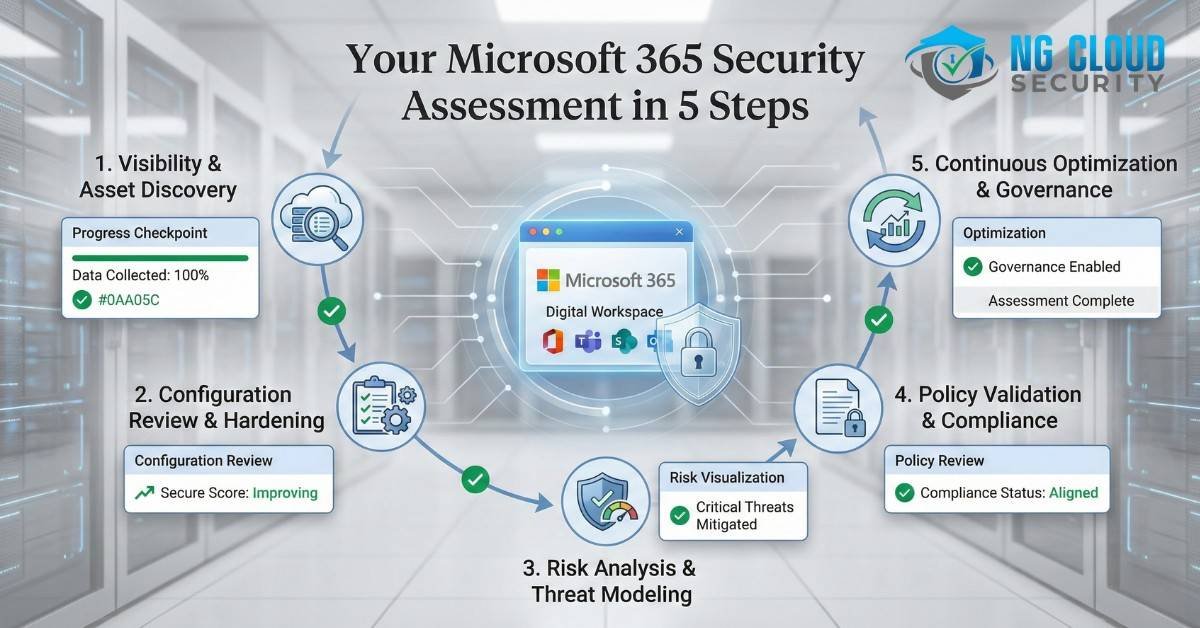
Your Microsoft 365 Security Assessment in 5 Steps
Your Microsoft 365 Security Assessment in 5 Steps provides a structured approach to evaluating and strengthening the security posture of your Microsoft 365 environment. Organizations must regularly assess security configurations, identify vulnerabilities, and understand potential risks to protect sensitive data and ensure compliance. This guide outlines a practical step-by-step methodology to review existing security controls, analyze threats, perform vulnerability assessments, and implement effective remediation strategies to enhance overall Microsoft 365 security and operational resilience
1. Define Objectives and Scope
- Identify the goals and objectives of the assessment, such as identifying security vulnerabilities, improving data protection, or ensuring compliance.
- Determine the scope of the assessment, including which Microsoft 365 components and services will be evaluated.
2. Evaluate Current Security Configuration
- Review the existing security settings and configurations within Microsoft 365, including user permissions, access controls, and data protection mechanisms.
- Assess the effectiveness of the current security measures and identify any potential gaps or weaknesses.
3. Assess Threat Landscape and Risks
- Analyze the potential threats and risks specific to your organization’s environment.
- Identify common attack vectors, such as phishing, malware, or data breaches, and assess the likelihood and impact of each risk.
4. Conduct Vulnerability Analysis
- Perform a comprehensive vulnerability assessment of your Microsoft 365 environment.
- Utilize automated tools and manual techniques to identify any vulnerabilities in configurations, applications, or systems.
- Assess the severity of each vulnerability and prioritize them based on potential impact.
5. Develop Recommendations and Remediation Plan
- Based on the assessment findings, develop a set of recommendations to enhance the security of your Microsoft 365 environment.
- Provide actionable steps to address identified vulnerabilities and mitigate risks.
- Prioritize recommendations based on severity, impact, and feasibility, considering both technical and organizational factors.
