

How Long Does Cloud Migration Take for Enterprises
When business leaders ask me how long does cloud migration take, my honest answer is always it depends. In enterprise environments, cloud migration is not a single task. It is a structured transformation that impacts infrastructure, applications, security, and operations.
In my experience, organizations that first understand the different types of cloud migration approaches move faster and avoid costly rework later.
What Cloud Migration Means for Enterprises
Cloud migration is not just about moving servers to the cloud. It involves assessing legacy systems, modernizing applications, redesigning security controls, and aligning cloud strategy with business objectives.
This is where cloud advisory and consulting services become critical, especially for enterprises managing complex environments and compliance requirements.
Typical Cloud Migration Timeline for Enterprises
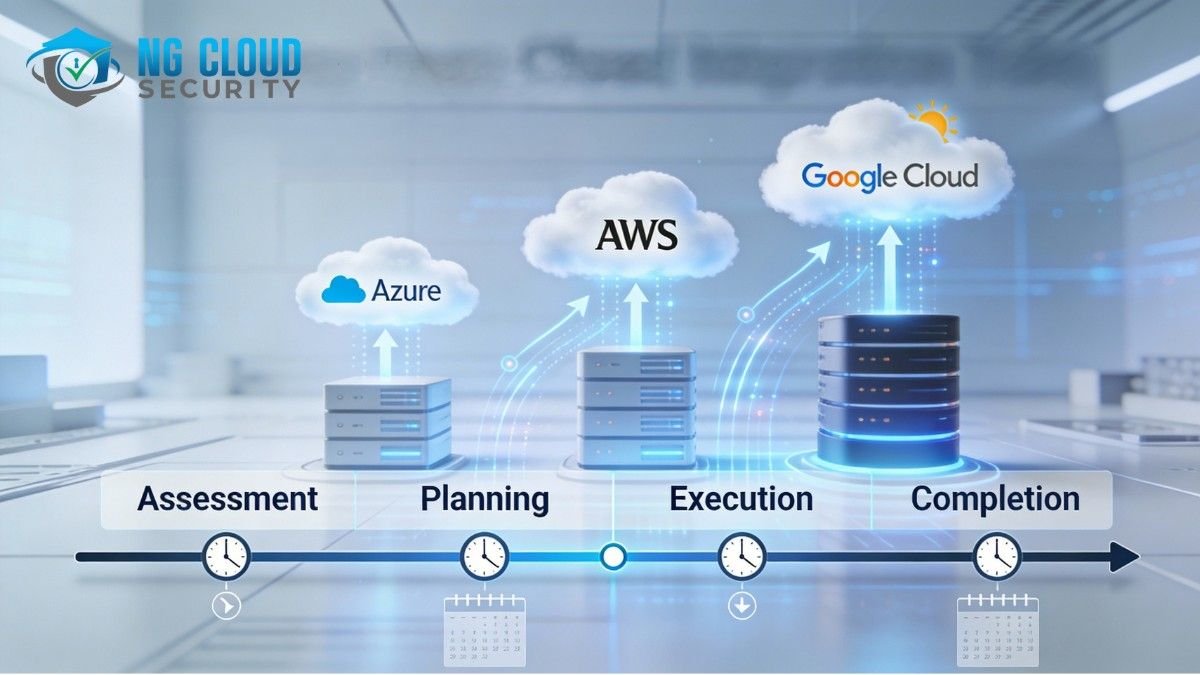
When clients ask how long does cloud migration take, I explain the journey in phases instead of fixed timelines.
Assessment and Planning Phase
This phase usually takes one to three months. Application discovery, dependency mapping, and risk assessment are done here. Enterprises that perform a cloud security assessment early reduce delays and security gaps later.
Architecture and Security Design
Security and identity design usually take one to two months. Zero Trust principles, access controls, and governance models are defined at this stage. Many enterprises align this phase with Zero Trust security services to strengthen access control and visibility.
Pilot Migration or Proof of Concept
A pilot migration typically runs for four to eight weeks. It validates performance, security, and operational readiness before scaling. Enterprises migrating to Azure often start with a well defined Azure landing zone architecture.
Full Scale Migration Execution
This is the longest phase and can take three to nine months depending on application complexity and data volume. Enterprises moving workloads to Azure rely heavily on Azure migration services to accelerate execution while reducing risk.
Optimization and Stabilization
Post migration optimization usually takes one to three months. This includes cost optimization, performance tuning, and security hardening. Many enterprises use cloud managed services to maintain stability and long term efficiency.
Factors That Affect Cloud Migration Duration
Several factors directly influence how long cloud migration takes for enterprises.
Application Complexity
Legacy applications often require refactoring or modernization, which increases timelines. This is where application modernization services play an important role.
Data Security and Compliance
Sensitive enterprise data requires encryption, monitoring, and governance aligned with strong data security frameworks.
Operational Readiness
Enterprises with mature IT operations move faster, especially when supported by managed IT and security operations.
Can Enterprises Migrate Faster Without Risk
Yes, but only with the right foundation. Enterprises that follow a seamless cloud migration approach experience fewer delays and fewer post migration issues.
Speed should never compromise security, governance, or long term scalability.
Final Thoughts
So, how long does cloud migration take for enterprises. In most real world scenarios, the answer falls between six and eighteen months. The timeline depends on application complexity, security requirements, internal readiness, and decision making speed.
From my experience, enterprises that treat cloud migration as a strategic transformation rather than a technical task achieve stronger security, better cost control, and sustainable business growth.
