

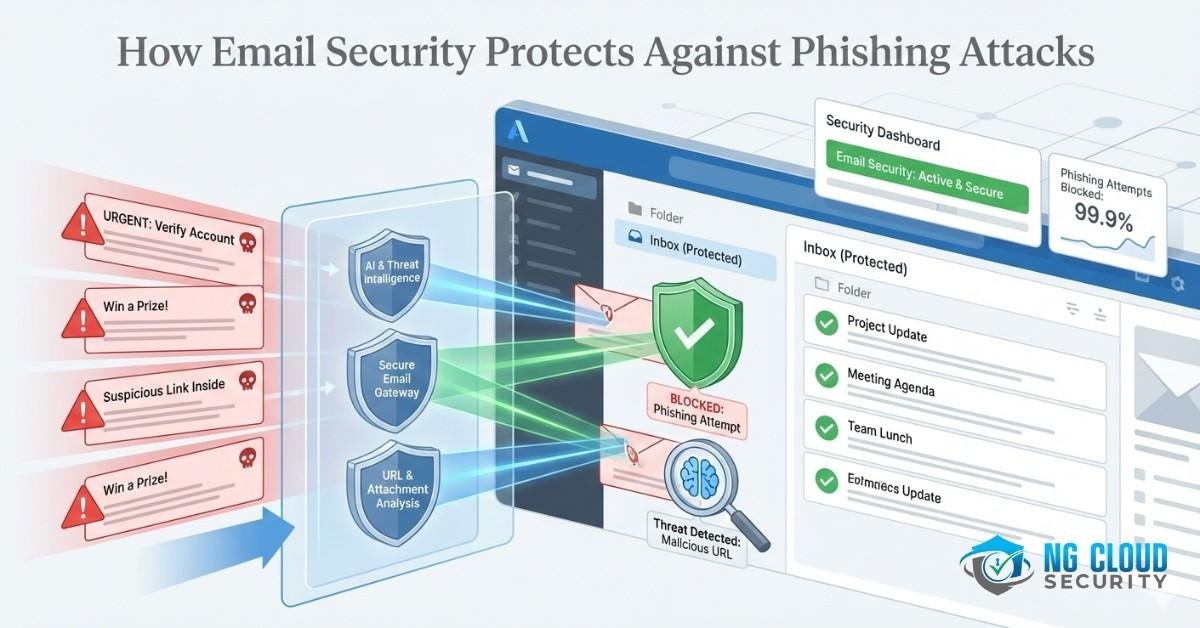
How Email Security Protects Against Phishing Attacks
In today’s digitally-driven world, email remains one of the most widely used communication channels for both businesses and individuals. While emails offer convenience and efficiency, they are also a prime target for cybercriminals. One of the most prevalent threats is phishing attacks—deceptive attempts by attackers to trick users into revealing sensitive information such
as passwords, credit card numbers, or company data. Protecting against such attacks is not just a technical necessity but also a critical component of organizational cybersecurity strategy. Ng Cloud Security specializes in providing robust email security solutions that safeguard against phishing attacks, ensuring the safety of sensitive information and maintaining business
continuity.
Understanding Phishing Attacks
Phishing attacks are malicious attempts to gain sensitive information by disguising as a trustworthy entity in electronic communication. These attacks often arrive via email and can appear strikingly legitimate, mimicking official communications from banks, colleagues, or well-known companies. Common phishing tactics include fake login pages, deceptive links, malware attachments, and urgent messages designed to create panic or prompt immediate action.
The consequences of a successful phishing attack can be severe. Businesses may suffer financial losses, sensitive client information may be exposed, and employees’ personal data could be compromised. Beyond direct financial impact, organizations may also face reputational damage, regulatory penalties, and long-term trust issues with customers.
The Role of Email Security
Email security is a critical layer in the defense against phishing attacks. It involves using a combination of technologies, policies, and best practices to detect and prevent malicious emails from reaching users’ inboxes. Ng Cloud Security provides comprehensive email security solutions designed to identify and neutralize phishing attempts before they can cause harm.
Key components of email security include:
1. Spam Filters and Malware Detection
Effective email security solutions deploy advanced spam filters that detect suspicious emails based on specific patterns, keywords, and sender reputation. These filters prevent a significant portion of phishing emails from reaching end users. Additionally, malware detection systems scan attachments and embedded links to identify potential threats, blocking malicious content in real-time.
2. Phishing Awareness and Training
Even with advanced technology, human vigilance remains crucial. Many phishing attacks rely on tricking users rather than exploiting technical vulnerabilities. Ng Cloud Security emphasizes employee training programs that teach users how to recognize suspicious emails, verify sender authenticity, and avoid clicking on malicious links. These training sessions empower employees to act as the first line of defense against phishing attacks.
3. URL and Link Protection
Phishing emails often contain deceptive links that redirect users to fraudulent websites. Email security platforms offer URL protection that automatically scans and verifies links before users can access them. Unsafe links are either blocked or flagged, reducing the risk of credential theft and malware installation.
4. Advanced Threat Intelligence
Modern phishing attacks are constantly evolving, using sophisticated tactics such as spear phishing, which targets specific individuals or organizations. Ng Cloud Security leverages advanced threat intelligence to monitor emerging phishing trends, ensuring that security systems are continuously updated to counter new attack vectors. This proactive approach helps businesses stay one step ahead of cybercriminals.
5. Two-Factor Authentication (2FA) Integration
Even if a phishing email manages to capture a user’s credentials, two-factor authentication adds an additional layer of security. By requiring a secondary verification method, such as a code sent to a mobile device, unauthorized access can be prevented. Ng Cloud Security integrates 2FA with email systems to enhance overall protection.
How Businesses Benefit from Email Security
Investing in email security offers multiple advantages beyond simply preventing phishing attacks. Some key benefits include:
1. Reduced Risk of Data Breaches: By stopping malicious emails before they reach employees, organizations significantly reduce the likelihood of sensitive information being compromised.
2. Increased Productivity: With fewer phishing emails making it to the inbox, employees spend less time dealing with suspicious messages, allowing them to focus on core business activities.
3. Compliance and Regulatory Protection: Many industries are governed by strict data protection regulations. Robust email security helps organizations maintain compliance and avoid penalties associated with data breaches.
4. Enhanced Reputation: Demonstrating a strong commitment to cybersecurity builds trust with clients, partners, and stakeholders. It reflects a proactive approach to protecting sensitive information.
Best Practices for Email Security
To maximize protection against phishing attacks, businesses should adopt a multi-layered approach:
1. Regular Software Updates: Keeping email clients and security software updated ensures that known vulnerabilities are patched promptly.
2. Strong Password Policies: Encouraging complex passwords and regular changes helps prevent unauthorized access even if credentials are compromised.
3. Email Encryption: Encrypting email communications protects sensitive data from interception during transmission.
4. Monitoring and Reporting: Implementing systems to monitor email activity and report suspicious emails enhances overall security visibility.
5. Regular Security Audits: Periodic assessments of email security measures help identify gaps and improve defenses against phishing threats.
Conclusion
Phishing attacks remain one of the most significant cybersecurity threats facing organizations today. However, by adopting robust email security measures, businesses can significantly reduce their risk. Ng Cloud Security provides advanced solutions that combine technology, employee training, and proactive threat monitoring to protect against phishing attacks effectively. By investing in comprehensive email security, businesses not only safeguard sensitive data but also enhance operational efficiency, maintain regulatory compliance, and build trust with clients and partners. In an era where cyber threats continue to evolve, email security is no longer optional—it is a strategic necessity for protecting both organizational assets and the people who rely on them.
